Is your blood pressure higher every winter, even though your pills and morning routine haven't changed? Cold weather can nudge the number upward, especially in older adults, and one rushed reading won't explain why.
The useful move is simple: measure carefully, write it down and show the pattern to your doctor. Don't change your medicine because of one number.
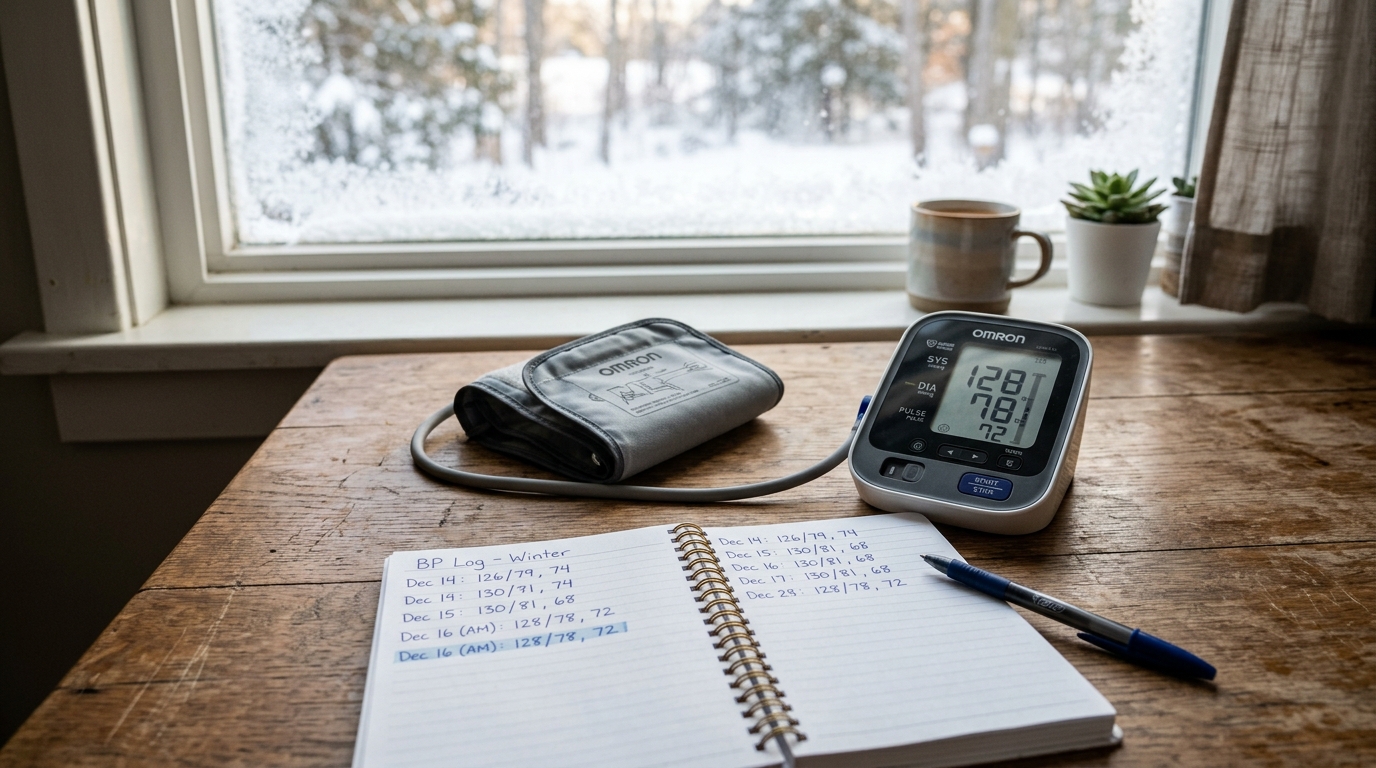
A mug, a pencil and the cuff on the kitchen table are enough to get started. Your log won't tell you everything, but it can turn a guess into a useful conversation.
- ✓Cold weather can raise blood pressure, especially in older adults.
- ✓A careful home log is more useful than one surprising reading.
- ✓Don't change medicine on your own. Bring the pattern to your doctor.
Three studies, one seasonal pattern
Researchers in France compared outdoor temperatures with blood pressure readings from 8,801 adults age 65 and older in the Three-City Study. The top number, systolic pressure, ran about 8 mm Hg lower in the warmest temperature group than in the coldest. The difference was bigger among people age 80 and older.
An Israeli study followed 182 treated patients ages 65 to 91; their average reading was 165/90 in winter and 134/74 in summer. During that study, 38% needed additional blood pressure medicine in winter, and heart attacks and strokes were twice as common in winter.
A Japanese study looked at healthy older adults whose average age was 79, and home readings peaked in February and were lowest in August. For each 1°C drop, systolic pressure rose by about 0.43 mm Hg. Your number won't necessarily follow that exact path, but a log can show whether the seasons are affecting you.
What the cold is doing
When you're cold, your blood vessels tighten. Blood has less room to move, so pressure against the vessel walls can rise. Shivering and the effort your body makes to hold on to heat may add strain for a while.
Winter habits can push in the same direction. You might be walking less, eating more salty prepared food or spending more time indoors. The American Heart Association says some over-the-counter pain relievers and decongestants can raise blood pressure, too. Before you use a cold or pain product, ask the pharmacist, particularly if your readings are already high.
The American Heart Association defines high blood pressure as 130/80 or above. That doesn't mean one high reading diagnoses you. Your history, the monitor and the way you took the measurement all matter, so slow down. A cold hand, a rushed morning or a cuff pulled over a sweater can all throw the number off.
Make the home reading count
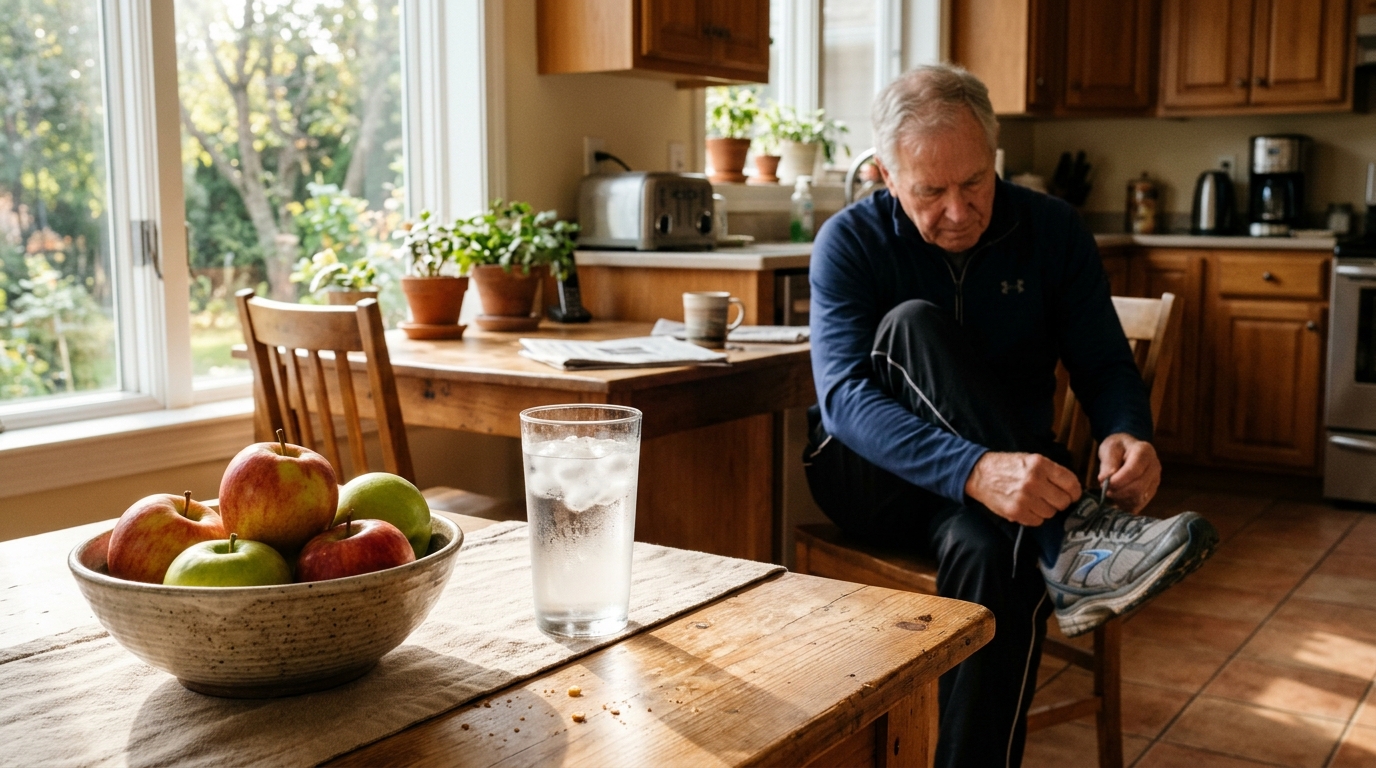
Use a validated upper-arm monitor with the right-size cuff. Try to measure under similar conditions each time, so your doctor can compare Tuesday with Thursday instead of comparing apples with a hurried breakfast.
1. Clear 30 minutes first. Skip caffeine, exercise and smoking for 30 minutes before you measure.
2. Use the bathroom. Empty your bladder, then sit quietly for 5 minutes.
3. Set your feet. Support your back, put both feet flat and keep your legs uncrossed.
4. Place the cuff on skin. Rest your arm on a table at heart level.
5. Keep still and quiet. Don't talk during the rest period or the measurement. Write down the time and result.
6. Take a second look when asked. If your doctor wants home monitoring, take two readings at least 1 minute apart.
The room shouldn't feel chilly. If you've just come inside from the porch, give yourself time to settle before you measure. Follow the schedule your doctor recommends, and you'll bring the log, monitor and medicine list to the appointment.
Give the numbers some context
Bring several days of readings, or the two-week log your doctor requested. Mark days when you were sick, unusually stressed, out in severe cold or using a new product. Those notes may show whether the change is temporary or seasonal.
One better reading isn't a reason to stop a prescription, and one worse reading isn't a reason to take extra medicine. Your doctor may adjust treatment after looking at repeated readings, symptoms, other health conditions and the device itself.
Is the cuff accurate? Bring it to an appointment and compare it with the office equipment. Keep it away from a drafty window. If it's spent the night in a cold car, let it return to room temperature, and never measure over a coat or sweater.
A note about the room can help, too. If the heating is off and your fingers are cold, don't rush the measurement. Let yourself get comfortable, then follow the same steps each time. You'll give the log a fairer chance to show what's happening.
When to call your doctor (or 911)
Call your doctor if your readings are repeatedly at or above 130/80, if they're rising over several days, or if you feel dizzy or unwell after a reading. Your pharmacist can also help check whether a nonprescription medicine may be pushing the numbers up.
Don't chase the cuff's number all day. Take the next reading calmly, write down the time and bring the pattern to your doctor.
Fact-Checked Medical Sources
- Archives of Internal Medicine: Relationship Between Blood Pressure and Outdoor Temperature in a Large Sample of Elderly Individuals ↗
- Gerontology: Seasonal Blood Pressure Study in Treated Older Adults ↗
- Clinical and Experimental Hypertension: Home Blood Pressure and Temperature in Older Adults ↗
- AHA and AMA: Self-Measured Blood Pressure Monitoring at Home ↗
- American Heart Association: Blood Pressure Raisers ↗
Last reviewed: November 2026 · Fact-checked & verified