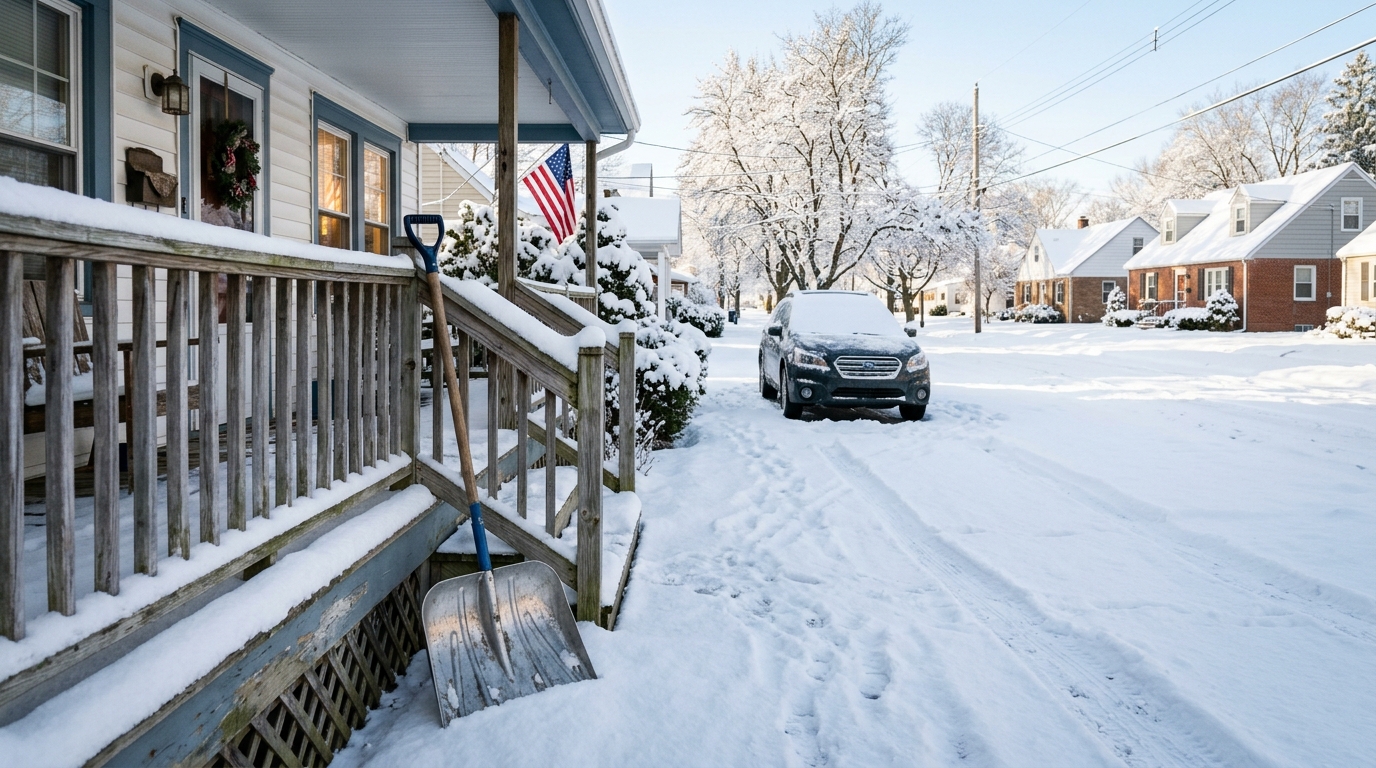
The first real snow came overnight, the heavy wet kind that sticks to the shovel. You're in the driveway early, wearing the old coat with the torn pocket and thinking about the coffee inside.
The first scoop looks manageable. Then your shoulders tighten, you hold your breath to lift, and the shovel feels heavier than it did five minutes ago. For your heart, snow shoveling is a sudden burst of hard upper-body work in cold air.
A 1995 JAMA study found that 10 minutes of heavy snow shoveling pushed healthy, untrained men to 97% of their maximum heart rate. That doesn't mean shoveling causes a heart attack. It does explain why pacing, breaks, and warning signs matter.
- ✓**Start with a small pass.** Ten minutes of heavy shoveling pushed young, healthy men to 97% of maximum heart rate.
- ✓**Keep breathing.** Cold, arm work, and breath-holding can pile stress onto the heart.
- ✓**Put the shovel down early.** Push, take small scoops, rest often, and stop for warning signs.
Why the shovel works your heart so hard
In the JAMA study, 10 healthy, untrained men averaged 32. They cleared heavy, wet snow by hand and used an electric snow thrower for comparison. At 2 minutes of manual shoveling, mean heart rate had reached 86% of maximum; by 10 minutes, it was 97%.
While the men shoveled, systolic blood pressure averaged about 198 mm Hg, higher than during the electric snow thrower portion. The researchers described the cardiac and aerobic demands as comparable to maximal treadmill and arm-ergometer testing in these sedentary men.
The study was small and controlled, and its young volunteers can't predict every driveway. The lesson is still plain: you don't have to feel out of shape for a shovel to make your heart work hard.
Cold piles on another demand. The repeated arm motion is hard work, and a packed scoop may make you strain and hold your breath. Cold air constricts blood vessels, so blood pressure can rise and the heart can work harder.
People often clear snow quickly, outside, before their bodies have eased into the day. Treat the first pass like exercise, not a harmless warm-up before breakfast.
What studies found after a big snowfall
A Quebec case-crossover study examined hospital admissions and deaths from heart attack during winters from 1981 through 2014. Among men, 20 centimeters, about 8 inches, of snow was associated with 16% higher odds of heart-attack hospital admission and 34% higher odds of heart-attack death the next day, compared with no snow.
Researchers counted 128,073 hospital admissions and 68,155 deaths in that study. The association was not seen in women in the same way, and researchers didn't measure who actually shoveled. Snow itself, cold, travel conditions, and physical work may all be tangled together, so the cause isn't simple.
An Ontario chart review looked at 500 patients with acute coronary events. Seven percent of the events followed snow shoveling. Those patients were 3.6 times more likely to have a family history of early heart disease and 4.8 times more likely to be male than the comparison group.
Both studies observed patterns rather than assigning people to shovel. They show associations, not proof that shoveling alone caused an event. Treat a heavy, wet driveway like strenuous exercise; that's the practical takeaway.
When the shovel belongs to someone else
If you've known heart disease, a prior heart attack or stroke, high blood pressure, diabetes, high cholesterol, a history of smoking, or a family history of early heart disease, ask your doctor before shoveling. If you rarely exercise, be cautious about making a snowstorm your day's hardest workout.
Being younger doesn't make you invulnerable, as the JAMA volunteers show. If you're older, have risk factors, or feel unwell, hand the job to someone else. Hiring help, asking a neighbor, or using an appropriate snow-removal machine isn't a failure of independence; it's a sensible health decision.
Heavy wet snow is harder to move than a light dusting, and wind can make the cold feel more severe. If the driveway is long, steep, or packed down, clear a walking path and arrange the rest. You don't get extra credit for doing every inch yourself.
Shovel with less strain
- Push instead of lift. Pushing or sweeping usually asks less of the body than lifting and throwing a full scoop.
- Take small scoops. Packed wet snow can be surprisingly heavy. Keep the load light and don't twist as you move it.
- Start gradually. Warm clothing, a slower first pass, and frequent breaks beat racing to clear the whole driveway.
- Don't hold your breath. Exhale as you lift or push instead of bearing down through the effort.
- Stop when your body says stop. A snow thrower or a helping hand may be wiser, especially after a heavy storm.
Don't shovel immediately after waking or after a large meal. If your doctor has told you to limit exertion, follow that advice and ask before taking on snow removal. You shouldn't come back inside feeling worse than when you went out; that's the goal.
When to call your doctor (or 911)
New chest discomfort with exertion, unusual shortness of breath, or symptoms that return with movement are reasons to stop and call your doctor. Don't test yourself by finishing the last strip of driveway.
Don't wait to see whether serious symptoms fade on their own. Put down the shovel, get help, and let professionals decide what comes next.
When the next storm comes, let somebody else take the steep part of the driveway. Your heart doesn't care who gets credit for the clean pavement.
Fact-Checked Medical Sources
- JAMA: Cardiac Demands of Heavy Snow Shoveling ↗
- CMAJ: Association Between Quantity and Duration of Snowfall and Risk of Myocardial Infarction ↗
- Clinical Research in Cardiology: Snow Shoveling and Acute Coronary Events ↗
- American Heart Association: Snow Shoveling and Cold Temperatures ↗
- American Heart Association: Warning Signs of a Heart Attack ↗
Last reviewed: November 2026 · Fact-checked & verified