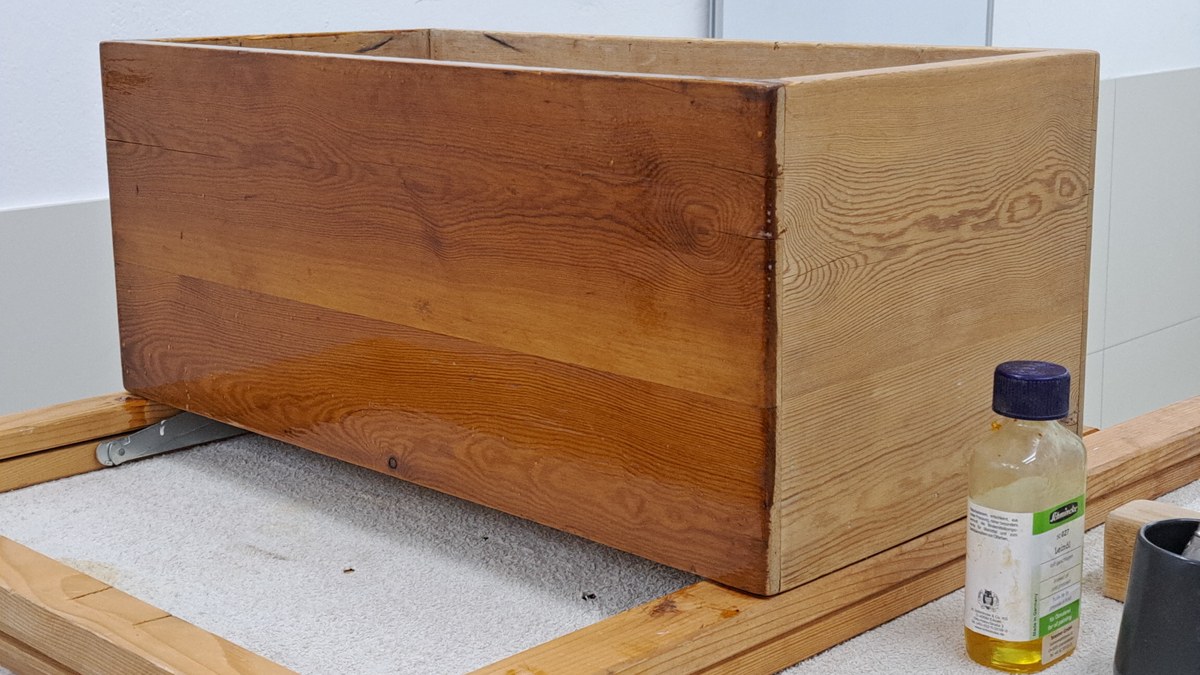
Walk into almost any old shop and you'll find a can of boiled linseed oil on the shelf, usually with a stiff rag beside it. Tung oil is the other old standby. Both bring out the grain and give wood a warm, hand-rubbed look. But they are not the same, and the label on the can doesn't always tell you what's inside.
Where they come from
- Linseed oil is pressed from flaxseed.
- Tung oil comes from the seeds of the tung tree, which is native to China, according to Encyclopaedia Britannica.
Why "boiled" linseed oil isn't really boiled
Raw linseed oil cures very slowly. A government report from the National Bureau of Standards (now NIST) describes boiled linseed oil as linseed oil treated with lead and other metal drying compounds so it dries much faster. The name is old and not very accurate. Today's products use different driers, so read the label, but the idea is the same: boiled linseed oil has driers added; raw linseed oil does not.
How oil finishes work
Both are drying oils. They soak into the wood and slowly harden by reacting with oxygen in the air. Popular Woodworking notes that pure oils stay relatively soft and don't build the hard, moisture-resistant film you get from varnish. The USDA Forest Products Laboratory makes the same distinction between penetrating finishes like oil and film-forming finishes like varnish.
So an oil finish looks and feels natural, but it protects less. For a dining table that sees spills every day, varnish or polyurethane holds up better. For a tool handle, a turned bowl for display, or a rustic shelf, oil is hard to beat.
The big difference
| | Pure tung oil | Boiled linseed oil |
|---|---|---|
| Comes from | Tung tree seeds | Flaxseed, with driers added |
| Water resistance | Better | Lower |
| Color over time | Yellows less | Yellows and turns more orange with age |
| Time between coats | Often 2 to 3 days | Often overnight in a warm room |
| Best for | Pieces that may get damp, when you want less amber | Warm, amber tone, quick projects, tool handles |
These comparisons come from Popular Woodworking's finishing experts. The exact color and dry time depend on the wood, the room, and the product, so always follow the label.
The "tung oil finish" surprise
Here's what trips up a lot of people. Bob Flexner, writing for Popular Woodworking, says many products labeled "tung oil finish" are actually wiping varnish: an alkyd or polyurethane varnish thinned with mineral spirits. Some contain little or no tung oil at all.
That's not necessarily bad. Wiping varnish is easy to apply and protects better than oil. But if you want pure tung oil, look for a label that says "100% tung oil" or "pure tung oil."
How to apply either oil
Is it food safe?
Be careful here. Federal food contact rules allow drying oils like tung and linseed as ingredients in certain approved coatings, but that does not mean every can of oil or "tung oil finish" is approved for food contact. For cutting boards and serving boards, the University of Maine Extension recommends food-grade mineral oil or beeswax, which is what we use.
The rags can start a fire
This is the part nobody should skip. Rags soaked with linseed oil or other drying oils can heat up on their own and catch fire, the National Park Service warns. It happens as the oil cures, and a bunched-up pile of rags is the worst case.
Massachusetts fire officials say to lay used rags flat, one at a time, outdoors away from anything that burns, never in a pile or a bucket. When they are dry and stiff, throw them out the way your town says.
Plenty of shops kept one can of boiled linseed oil for everything, from shovel handles to the kitchen table. It still works, and it is still cheap. Today we just read the label more closely, choose the right oil for the job, and put the rags outside to dry.