Every head in the room turned.
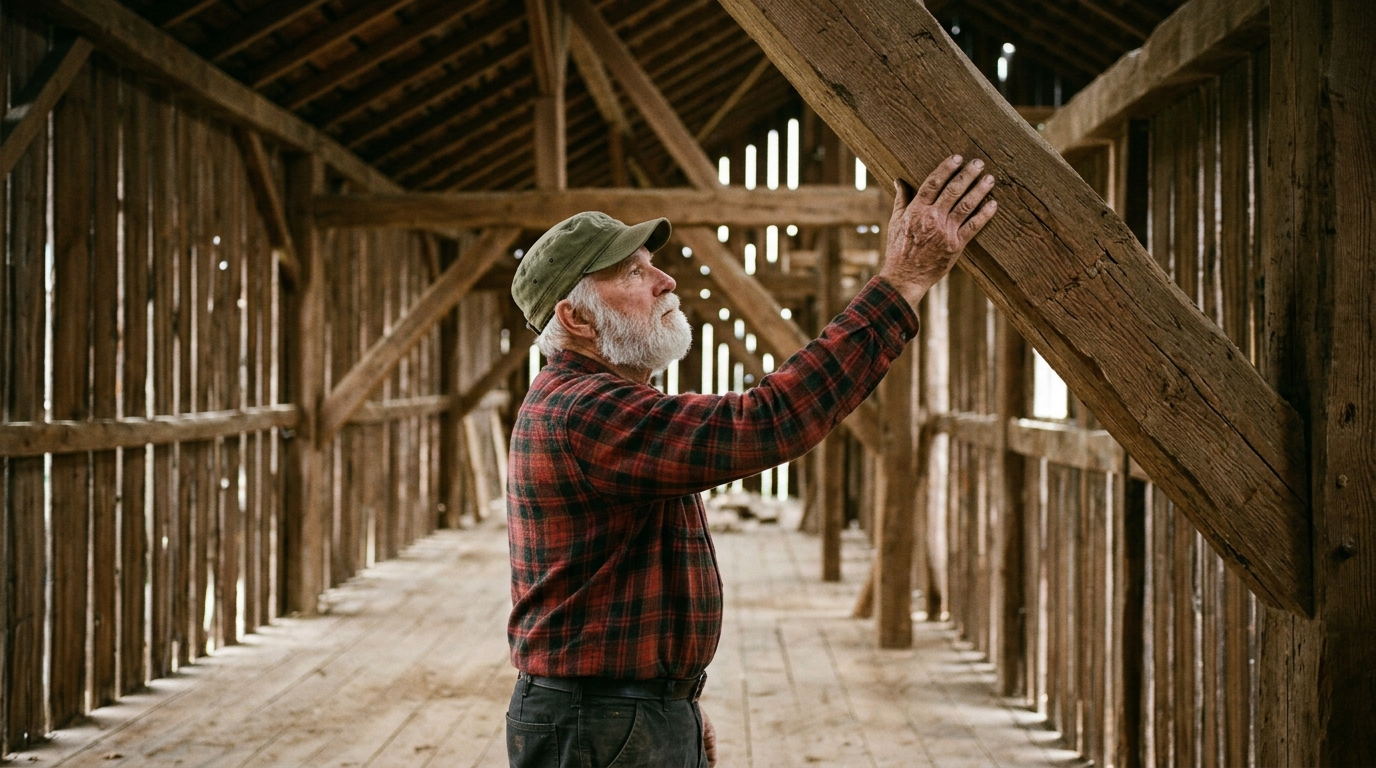
Walt stood there a moment, the way he stood over a board before he cut it. Then he spoke. Not loud. He didn't need to be.
"Lloyd's wrong," he said. "There are people coming after us. We just never asked them in."
He looked around the room.
"Look at this place. Look at that wall. Every picture up there is somebody's grandpa. When was the last time anybody under fifty walked in here? You know why they don't? Because it looks like a place for old men to drink and remember. And we let it."
Nobody said anything. Lloyd's jaw was tight.
"I know three veterans in this county under forty-five," Walt said. "Probably there's thirty. Jess Miller, out past Hollow Creek, was an Army medic in Afghanistan. Marcus Bell, who did the new roof at the feed store, was a Marine. Danny Ortiz, who does everybody's taxes, did two tours in Iraq. Not one of them has ever been asked to come here. Not by me. Not by any of you."
He paused. His voice changed, just a little.
"When Bobby and Eddie and I got on that bus," he said, "there was a man from this post at the station. World War Two. He shook every one of our hands and told us when we got home, there'd be a chair for us here."
He looked at the photograph on the wall.
"Two of us never got to sit in it. And I never sat in mine." He looked at Lloyd. "I'm sorry, Lloyd. I should have."
Lloyd Hersh didn't say anything. He just nodded, slow, and wiped his eyes with the back of his hand.
"Give me till the tax sale," Walt said. "Before anybody votes to sell."
Nobody voted.
Walt didn't make phone calls. He drove.
He went out to the Miller farm and found Jess in the barn, feeding calves. He sat on a hay bale and told her what he'd told the men at the post, plain and short.
Jess listened. Then she said, "Nobody's ever asked me to anything like that. I figured it was a club for... well."
"For old men," Walt said. "It was. That's the problem."
He found Marcus Bell on a roof in Marietta and waited at the bottom of the ladder for an hour until Marcus came down. He found Danny Ortiz in his little office above the hardware store, with stacks of other people's tax returns on every flat surface.
They came to the next meeting. Then they brought others. A young woman who'd been in the Navy. Two Army brothers who'd moved back to take over their dad's farm. A National Guard sergeant who'd spent a year in Kuwait. By the first week of November, there were thirty-one people in that room, and some of them had brought their kids.
The kids found the pool table. Somebody found a new piece of felt for it.
Marcus Bell looked at the roof and laughed out loud. "Whoever did this last time ought to give you your money back." He brought his crew on two Saturdays and charged the post for materials and nothing else.
Danny Ortiz asked to see the tax bills. He took them home in a shoebox. A week later he came back with his reading glasses pushed up on his head.
"Lloyd," he said. "Did anybody ever tell this post it might qualify for a property tax exemption? As a veterans organization?"
Lloyd stared at him. "Nobody ever told us anything."
Danny filed the paperwork with the county. It took some letters and two meetings, and a little help from Grady Pruitt, of all people, who knew somebody in the auditor's office. In the end the county agreed to review the old bills. The thirty-one thousand dollars dropped to a number the post could pay with one good fish fry.
The young families ran that fish fry. They cleared six thousand dollars.
On December 2, three weeks after Veterans Day, the building came off the tax sale list.
But the day everybody would remember came before any of that was settled. On Veterans Day, Post 4417 held its ceremony in the parking lot, with the American flag on the pole out front and a crowd bigger than anybody could remember.
Lloyd Hersh asked Walt to say a few words.
Walt walked up to the front slowly. He didn't have any notes. He stood there for a while with his cap in his hands.
"In the spring of 1969," he said, "five of us got on a bus."
He said their names. All five. Then he told one story, just one, about Bobby Hersh and Eddie Sorensen and a mango they stole from a supply truck and split three ways, laughing so hard they couldn't eat it.
That was all. He didn't say anything else. He didn't need to.
Afterward, inside, Walt took down the photograph of Bobby and Eddie from the third row and hung it back up again, at eye level, right next to the door. Where everybody coming in would see them first.
Then he pulled out a folding chair at the long table, the one under the photograph.
And for the first time in fifty years, Walt Brenner sat in his chair.