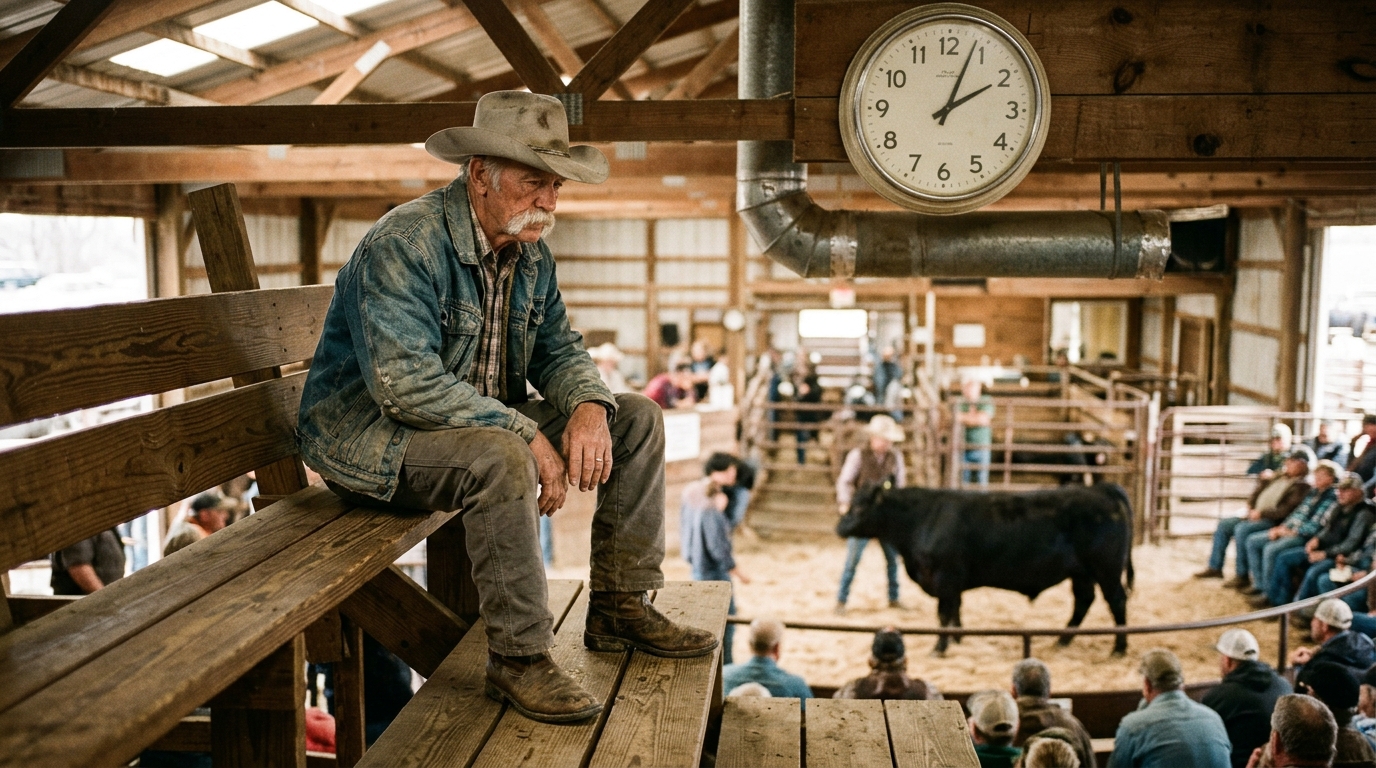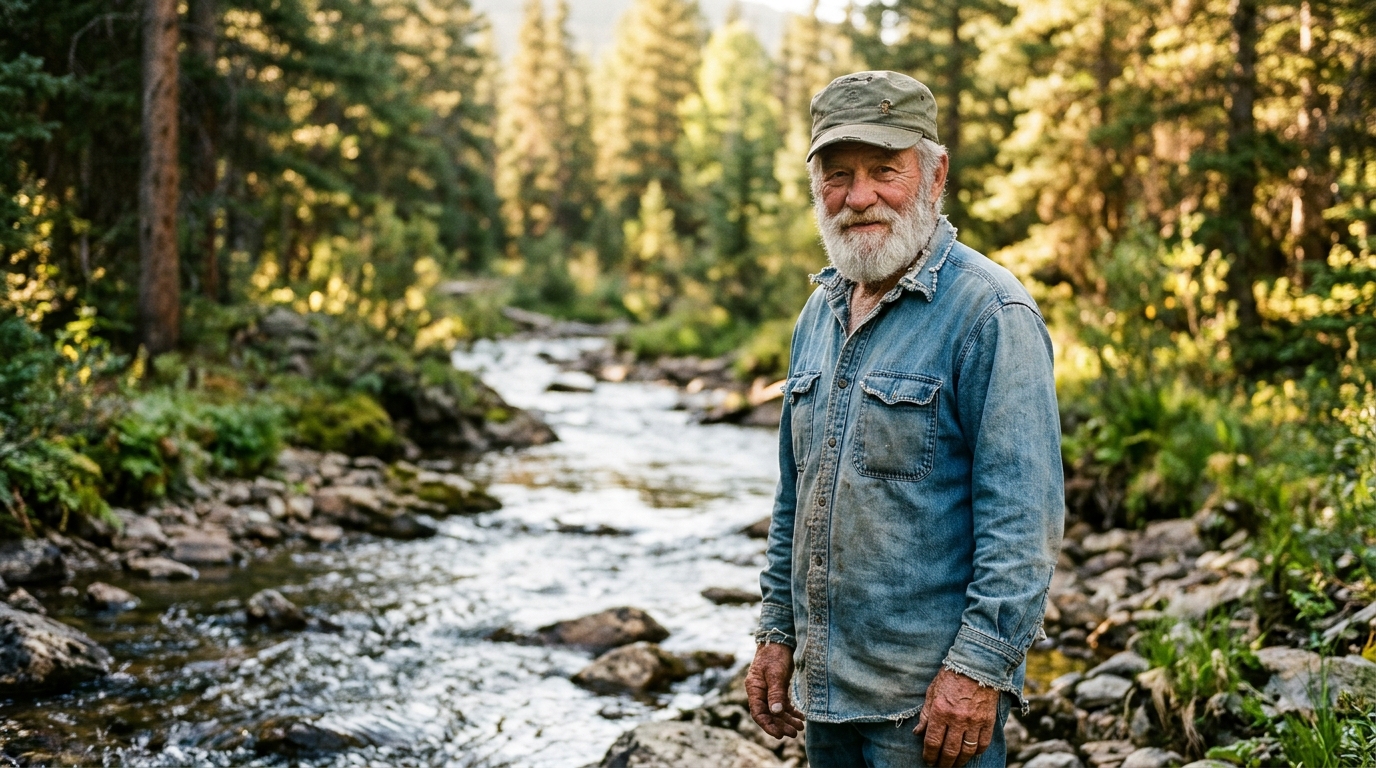
Sheriff Earl Whitaker got there in twenty minutes, which for Earl was speeding.
He crouched by the hole a long time without saying a word.
"Somebody was careful," he finally said. "Raked it. Covered it. Careful people usually have a reason."
"I didn't touch it," Brandon said quickly. "I didn't even know it existed until an hour ago."
"I believe you, son. You don't know which way is north yet."
Down by the shallow spot where tractors crossed the creek, Earl found tire tracks running up the bank toward the county road. Wide tires. Deep tread. Hardly any wear.
"Your tractor didn't make those," he said to Walt.
"Neither did my truck. My tires are older than that boy."
Kyle laughed, then tried to hide it.
Brandon's lawyer called before lunch. An unrecorded survey with no stone, he said, was just a piece of paper. Friday stood.
Brandon hung up and looked at the phone in his hand. "Mr. Brenner," he said, quieter now. "I put everything into this place. My savings. A bank loan. If I can't get that road, I can't open."
Walt nodded. He didn't say anything kind, and he didn't say anything unkind. Some things a man needs to hear himself say out loud.
That afternoon at Dot's Corner Diner, Grady Pruitt slid into the booth next to Walt and Earl without being asked.
"Walt, I heard about the little mix-up," he said. "Let's be reasonable. Nobody needs a lawyer over five feet of grass. And don't get hung up on that old stone business. That's just one of Emil Lutz's stories."
Earl set his coffee cup down very gently.
"Help me understand something, Grady," he said. "Who told you about a stone?"
The diner got quiet. Behind the counter, a fork stopped scraping a plate.
"Hon," Dot said, "I've been hearing Emil Lutz's stories since 1978. Never heard that one."
Grady laughed, checked his watch, and remembered a meeting.
When the bell rang behind him, Earl looked out the window. Grady's pickup sat at the curb, shining like it had just left the dealer.
Except for the wheel wells. They were packed with gray creek mud and wet brown leaves.
"Well," Earl said. "Isn't that interesting."
In the library basement, Ruth Ann Mercer pulled the 1951 Lutz survey file. The map was there. The page with the corner measurements was gone.
On the sign-out card taped inside the back cover, nobody had written a name in decades. Except for the last line, two weeks old.
*G. Pruitt.*
"Without that stone," Ruth Ann said quietly, "you've got a story and a coffee can, Walt. Friday stands."
Walt looked at the old map for a long time. Then he asked her a question that made no sense at all.
"Ruth Ann. What color was the glass they made at the glass works, that first year?"
She called him back that night, after checking two books and an old newspaper.
Mostly green.
Thursday morning, one day before Brandon's deadline, Walt walked down to the creek with a shovel over his shoulder and Biscuit at his heels. Earl was there. And to Walt's surprise, so was Kyle Dunn, with his GPS pole and a thermos.
"Nobody's paying me for this," Kyle said. "I just want to know if I was wrong."
Walt liked him a little more after that.
Brandon came down the hill last, looking like a man who hadn't slept.
"Emil Lutz swept floors at the glass works the year it opened," Walt said. "When he and the county surveyor set this corner in '51, he poured a bucket of broken glass in the hole first. Then the stone on top. He told me stones get moved. Plowed up, stolen, washed out. But nobody digs up a bed of broken glass by accident. And nobody thinks to look for it."
He dug slowly. He was seventy-six years old, and he had dug a lot of holes, and the slow ones always came out straighter.
About a foot down, the shovel scraped something that wasn't dirt.
Green. Hundreds of little pieces of old green glass, packed tight, catching the morning light like creek water. Pressed into the middle was a clean, flat square the size of a bread box, where a stone had sat for seventy-five years.
Kyle let out a long breath. "That's the corner."
He set his pole in the center of the square and walked the line, post hole by post hole. It took him two hours. When he came back, he looked at Walt first, then at Brandon.
"The fence is right," he said. "Within two inches. The 1998 plat was tied to a road marker on Route 9. When they widened the road, somebody reset that marker five feet off, and nobody ever caught it." He shook his head. "Your fence was right the whole time. My numbers were wrong."
"Your numbers were fine," Walt said. "You just started in the wrong place. Happens to all of us."
Grady Pruitt's pickup came down the county road a little after eleven. Earl had called him that morning. Walt never asked what Earl said.
Grady got out slowly. He wasn't smiling this time. He walked around back and dropped the tailgate.
In the truck bed, on a moving blanket, sat a block of sandstone the size of a bread box. On top, worn soft by seventy-five years of weather, was a chiseled X.
For a while nobody said anything.
"I read the file before I sold Brandon the land," Grady said finally. "I knew the old corner would kill his road. And I knew he'd walk away if he found out." He looked at the stone, not at anybody. "Business has been bad, Earl. I needed that sale."
"I know you did," Earl said. "So here's what happens now. You bring Ruth Ann her page back. You pay Walt for his fence. And you and Brandon sit down with a lawyer, a real one, and make that sale fair. Or I send my pictures of those tire tracks, and your wheel wells, to the county prosecutor. Your choice."
Grady nodded. Just once.
Brandon had gone pale. He sat down on the creek bank, right in the wet grass, in his nice jacket.
"So that's it," he said. "No road. No wedding barn."
Walt looked at him for a while. Then he looked at his own tractor lane, running along the fence.
"My lane's about twelve feet wide," he said. "You put eight feet next to it on your side, that's twenty. A shared lane. Recorded proper, both our names on it."
Brandon stared up at him. "You'd do that? After all this?"
"You gravel it. You plow it in winter. I drive my tractor on it whenever I please." Walt shrugged. "And a wedding barn makes a better neighbor than a lawsuit."
Brandon laughed, the real kind this time, the kind that sounds a little like crying.
They set the stone back that afternoon. Brandon held the shovel and packed the dirt around the stone with his boots until it sat solid, the X facing up.
When they were done, Walt went up to the house and came back with the old Folgers can.
He put the 1951 survey inside. Then Kyle's new one, folded on top. He wrapped them in the oilcloth, pressed the lid down, and tied the baling twine. Three knots.
He looked at Brandon.
"Someday," Walt said, "somebody's going to tell you the land moved."
Brandon thought about it for a second.
"Land doesn't move," he said.
Walt smiled, tucked the can under his arm, and headed back up the hill with Biscuit trotting ahead.
Brandon's boots didn't squeak anymore.