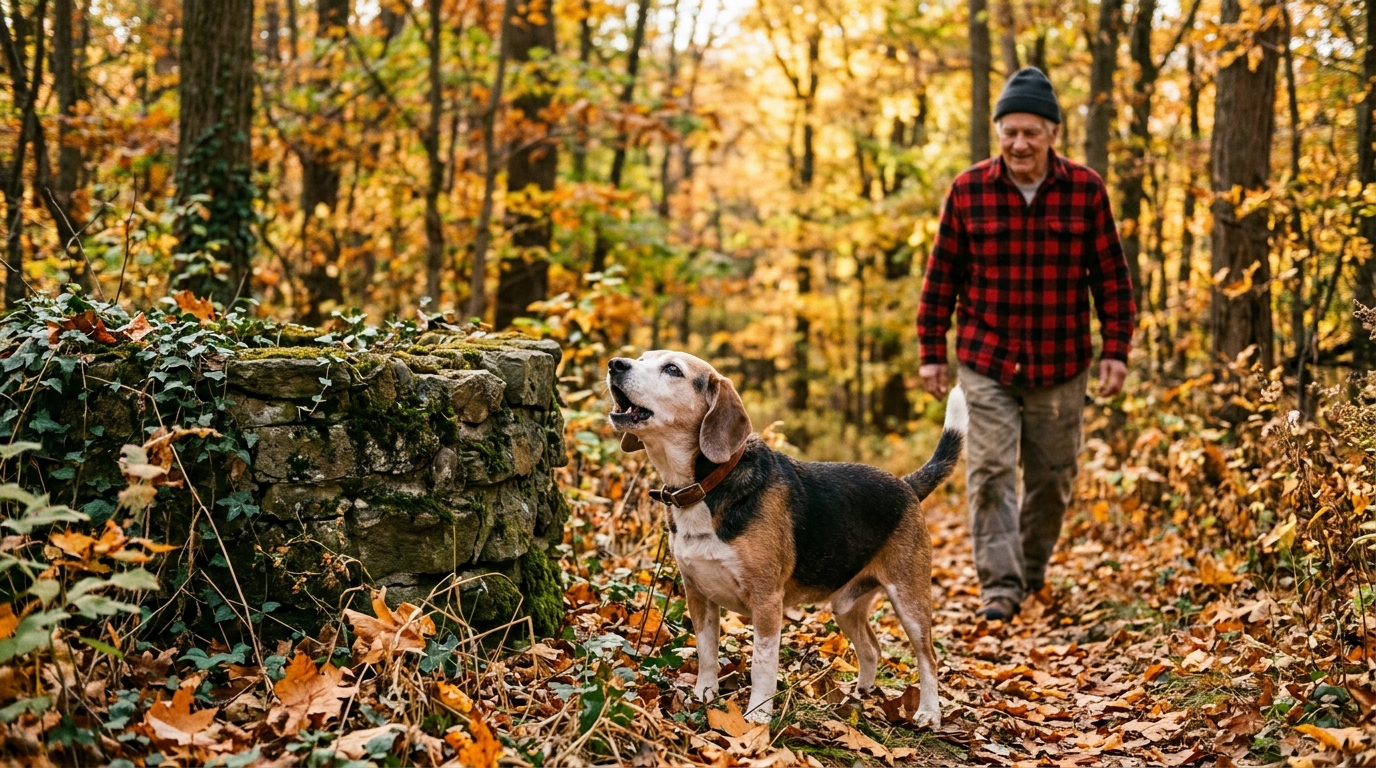
"Darlene," Walt said. "Before you sign. Will you do one thing for me?"
She held the pen over the paper. "What?"
"Ask Mr. Lyle a question." Walt nodded at the barn. "Ask him if he'll buy just one beam. The big one over the main door. Just that one. For five thousand dollars."
Curtis laughed. "That's ridiculous."
"Maybe," Walt said. "Then it won't hurt to ask."
Darlene looked from one man to the other. Then she turned to Curtis.
"Mr. Lyle, would you pay me five thousand dollars for that one beam?"
Curtis opened his mouth to say no. Then he looked up at the beam over the barn door. It was a monster. Fourteen inches square, maybe thirty feet long, hewn by hand a hundred and twenty years ago.
He closed his mouth again.
It was only a second. Maybe less. But Darlene saw him do the math in his head. And she saw him want it.
"I... would have to look at it closer," Curtis said.
Darlene set the pen down on the hood of his truck.
"I think," she said, "I'd like to get a couple more offers."
Curtis Lyle's white truck went down the lane a lot faster than it came up.
Darlene sat down on an old milk can by the barn door, put her face in her hands, and stayed there for a while. Walt let her. Biscuit went over and leaned against her leg.
"Why didn't you just argue with him?" Darlene asked finally.
"Because then it's his word against mine," Walt said. "A man tells you the truth with his face before he tells you with his mouth. Just had to give him a reason to."
That week, Walt took a two-foot piece from a rotten corner of the barn to his workshop on Route 9. He planed it smooth and finished it with a little oil. The warm brown grain came up under his hands like a photograph in a darkroom, the old wormholes dark and pretty.
Ruth Ann Mercer found the rest in the library basement: a farm account book belonging to Darlene's great-grandfather, Josiah Pike. The entry for August 1902 read, in brown ink: *Barn raised. Chestnut from the north woods. 38 men. Fed them all.*
With the sample and the account book, Walt helped Darlene call three reclaimed lumber dealers. One from Ohio, one from Kentucky, one from Pennsylvania who said he'd heard of a Curtis Lyle and wasn't surprised.
All three came out. All three climbed into the hayloft. All three came down quiet.
The best offer was sixty-eight thousand dollars. They'd take the barn down by hand, board by board, and pay her before the first truck left.
Darlene signed it at her kitchen table, and then she called Maple Grove to tell them her mother's bills would be paid through the next two years.
She tried to pay Walt. He wouldn't take it.
She tried three more times. Finally, she asked if he would take one thing instead: the big beam over the barn door. The one that started it.
"Only if I can make something out of it," Walt said.
Three weeks later, Walt carried a small table into Ada Pike's room at Maple Grove. Just big enough for a coffee cup, a Bible, and a photograph. The top was one solid piece of chestnut, smooth as river stone, the wormholes like little stars.
Ada was ninety-one. She didn't always know what day it was.
She put her hand flat on the table and moved it slowly across the grain. Then she closed her eyes and leaned down and breathed in.
"That's the barn," she said. "That's Daddy's barn. I'd know that smell anywhere."
Darlene stood behind her mother's chair with her hand over her mouth.
Walt tipped his cap to both of them, and went out to the truck, where Biscuit was waiting.