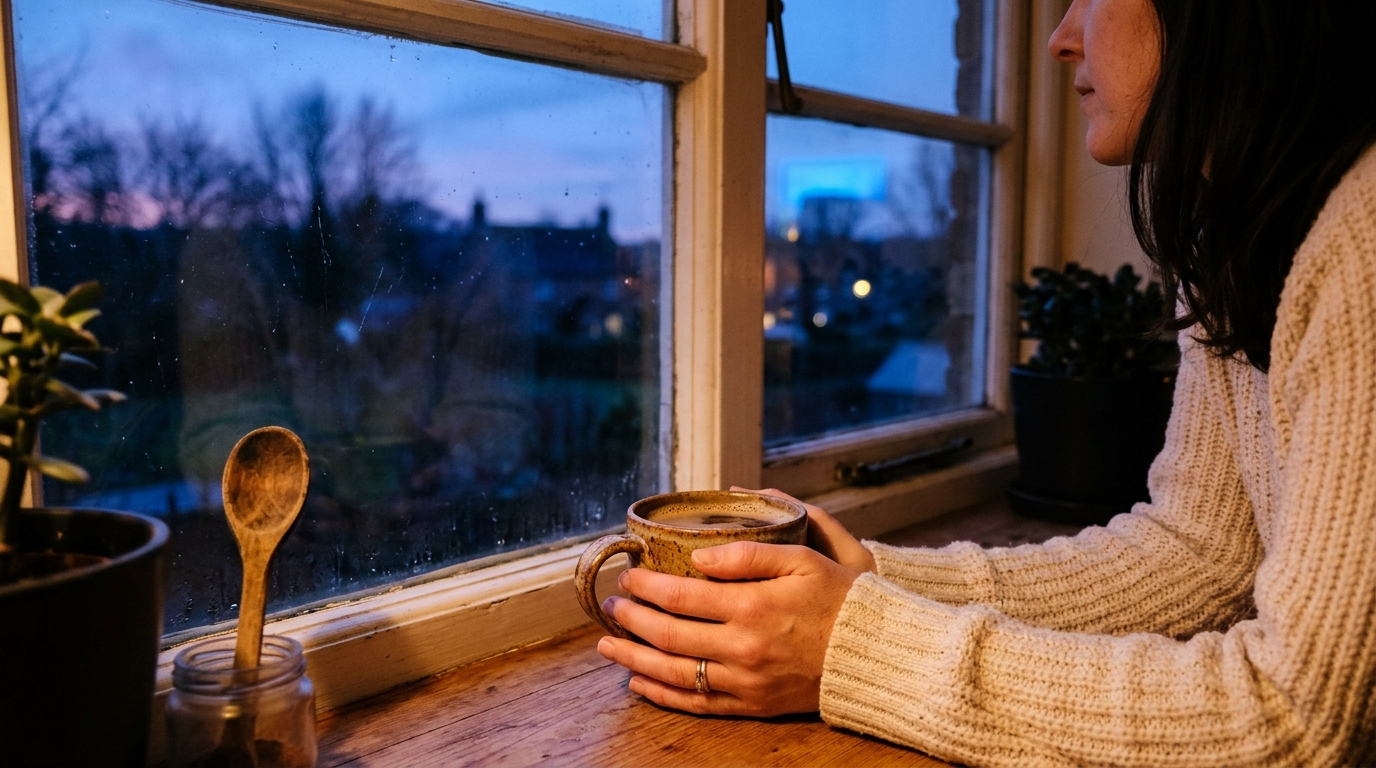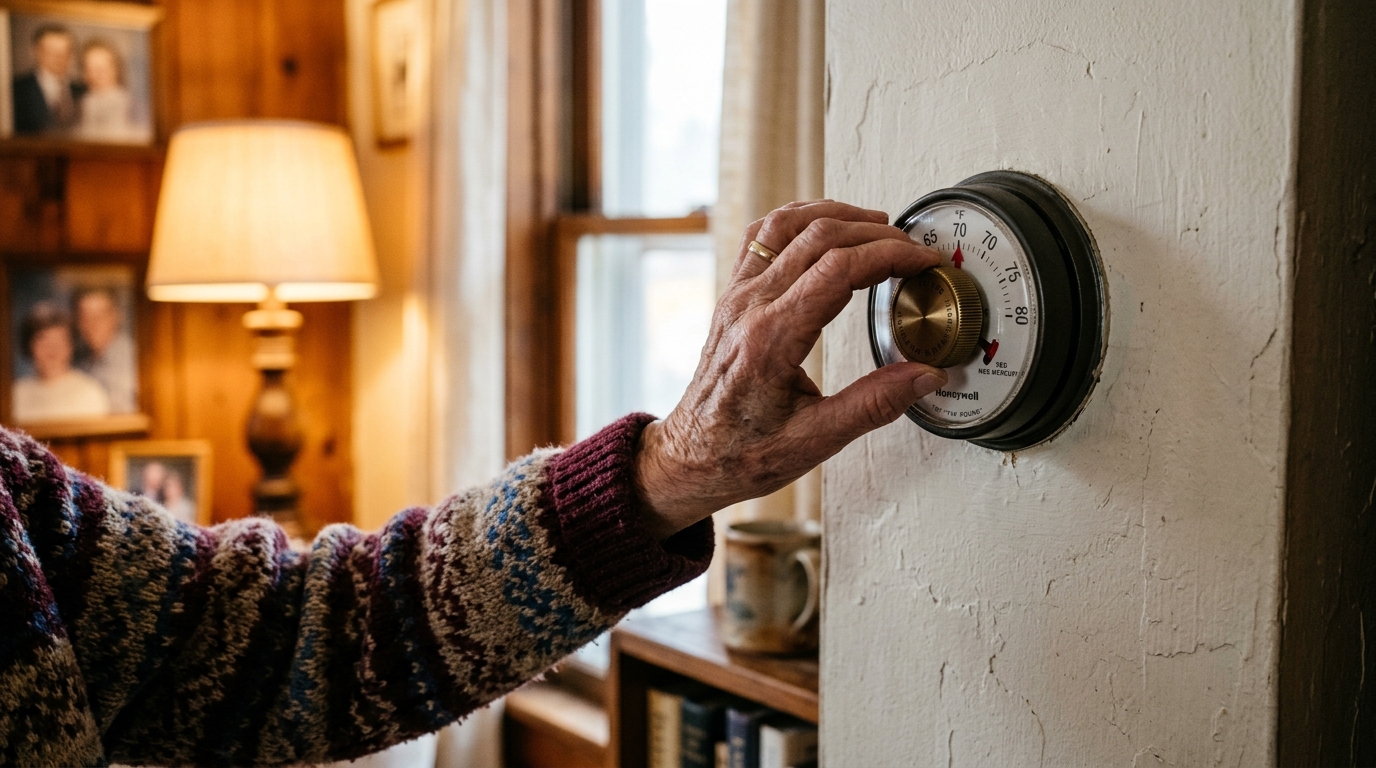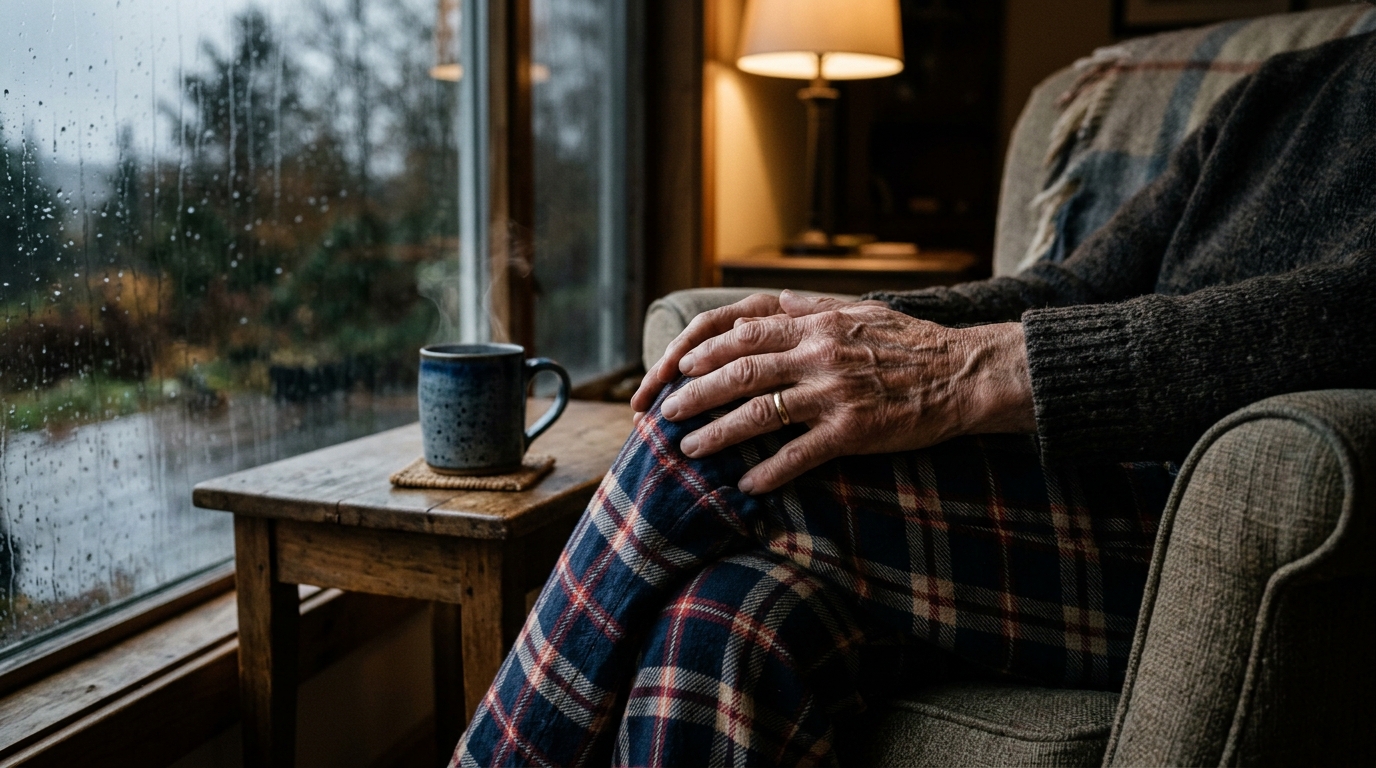
Cold weather gets blamed for aching joints all the time. The research is less tidy: one large US study found no meaningful link between rain and visits for joint or back pain, while a separate smartphone study found modest associations with some weather conditions among people with long-term pain.
So your knee isn't making up its complaint, but the forecast may not be the whole story. Activity, sleep, and the way you move through a cold day can matter too.
- ✓One large Medicare study found no meaningful rain-related increase in joint-pain visits.
- ✓Another study found modest links with humidity, pressure, and wind.
- ✓Keep moving gently, track your pattern, and call your doctor for worsening pain.
The belief is real, even when studies differ
You don't have to dismiss your experience to read the research carefully. Pain varies day to day, and a cold, wet morning can arrive with a stiff joint, poor sleep, less movement, or a mood that makes every ache harder to ignore.
The studies asked different questions. One counted visits to a doctor's office. Another asked people to record pain every day on a phone. A doctor's visit isn't the same as a painful morning at home, so the results can differ without either study explaining every knee.
The sensible answer is that the forecast alone can't explain what your body is doing. Track pain, activity, sleep, and weather for a few weeks. If a pattern keeps returning, show the record to your doctor.
Also notice what happens after sitting. A knee that feels stiff when you stand may loosen after a gentle walk around the house. That doesn't make the pain imaginary or prove cold air caused it. It gives you and your doctor more to work with. It also turns a vague weather complaint into something you can describe clearly at an appointment.
What 11 million doctor visits showed
Researchers examined 1,552,842 Medicare patients age 65 and older and 11,673,392 outpatient visits from 2008 through 2012. They compared local rainfall with visits for new or worsening joint pain and back pain. The small difference went opposite the popular belief, and they concluded there was no meaningful relationship.
The result held in a subgroup of people with rheumatoid arthritis. That tests the idea in people with an inflammatory joint condition, not only those with occasional aches. Still, the study measured visits, not every episode of pain. It can't prove weather never changes how someone feels.
The authors left room for better research, especially research that gathers pain reports more often. You can hurt without making an appointment, and you can visit a clinic for reasons unrelated to a rainy afternoon.
Why it can still feel true
A U.K. study called Cloudy with a Chance of Pain collected daily smartphone reports from 2,658 people with long-term pain over 15 months. It found modest associations between pain and relative humidity, air pressure, and wind speed, even after analysis accounted for mood and physical activity. Temperature didn't show a meaningful association in the final analysis.
That's a useful counterweight to the Medicare result, not a reason to declare a winner. The smartphone participants chose to report pain, most had chronic pain conditions, and the findings describe associations rather than proving weather directly changes pain. Your experience may differ from both groups.
Winter also changes behavior. When it's cold or wet, you may sit longer, skip a walk, or move cautiously. The CDC says physical activity can help people with arthritis reduce joint pain and improve function and mood. Less movement can leave a joint stiffer, even if rain isn't the culprit.
What helps achy joints in winter
You don't need a sunny forecast to care for a sore joint. Try these steps, and stop if an activity causes sharp or worsening pain:
1. Warm up gently. Walk around the house or move through easy range-of-motion exercises before going outside.
2. Keep moving indoors. A short walk, light gardening in a warm room, dancing, water exercise, or tai chi may beat sitting all day.
3. Break activity into pieces. The CDC says even short sessions count. Choose a manageable pace rather than making up for an inactive week at once.
4. Make cold less of a barrier. Wear layers, use shoes with a steady grip, and choose a dry indoor route when sidewalks are slick.
5. Write down the pattern. Note the joint, pain level, sleep, movement, and weather.
6. Ask for help with a persistent change. Talk with your doctor or pharmacist before starting a new treatment or changing how you use a medicine.
You don't need to settle the weather argument before you take care of yourself. If your knee hurts, you'll want a plan for the knee. If the pattern changes, that's worth reporting, whatever the forecast says.
You can't control the weather, but you can notice what your body needs. That's a more useful forecast.
You can't know what you'll notice until you've tracked it, and you don't need to explain it perfectly. If it's changing, that's enough reason to mention it.
When to call your doctor (or 911)
Call your doctor if pain is new, worsening, limits ordinary activities, or doesn't improve with rest and gentle movement. The CDC also says to call when pain or symptoms are severe, or a joint becomes hot, red, or very swollen.
Tell your doctor when the pain began, what changes it, and whether swelling, warmth, or stiffness is changing. You don't need to prove that rain is the reason.
Your knee may complain louder in January, and that's real. Keep it moving, keep a few notes, and let your doctor handle the part the weather can't explain.
Fact-Checked Medical Sources
Last reviewed: November 2026 · Fact-checked & verified