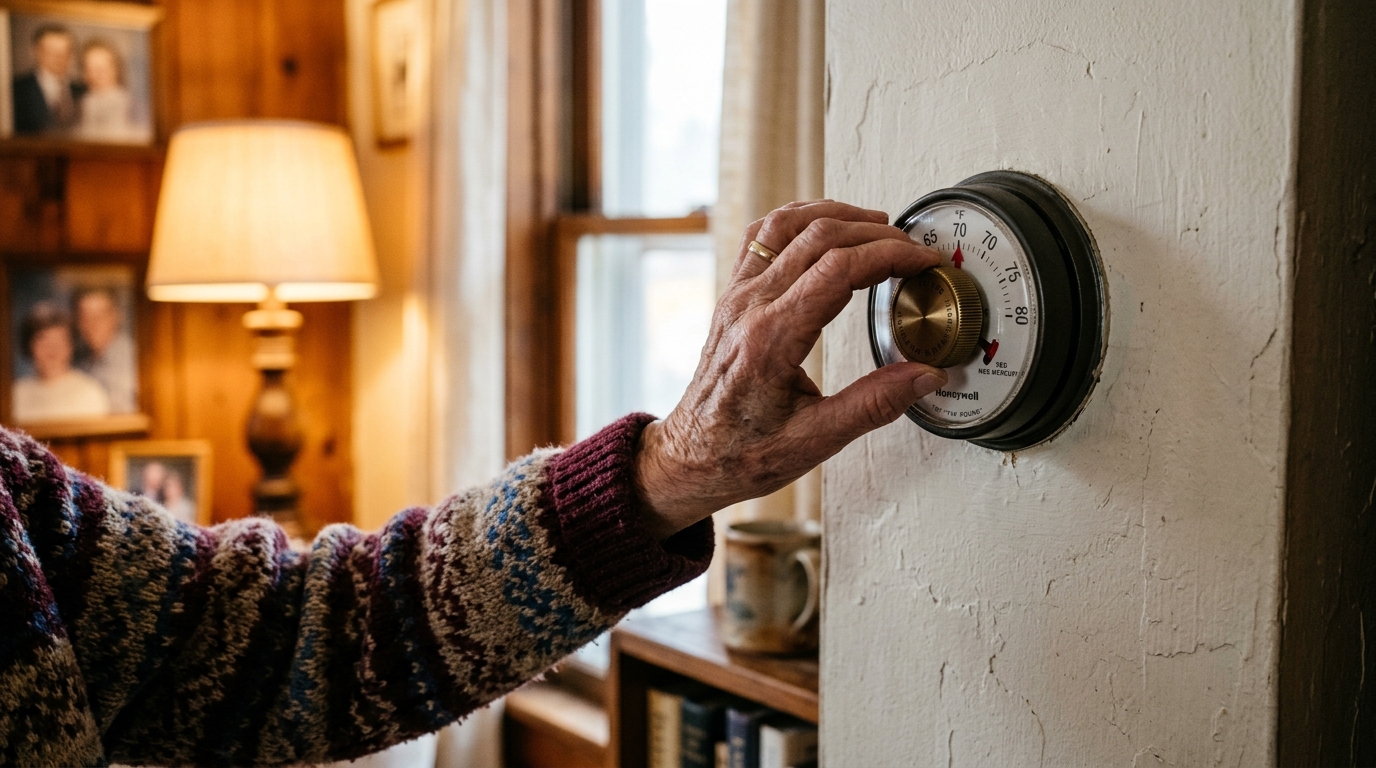
The heating bill arrives, and you do what you've always done when money gets tight. You turn the thermostat down. A sweater goes over another sweater. The coffee is hot, the pipes are quiet, and nothing feels urgent.
That's the trouble with indoor cold. An older person may not feel danger building, especially when an illness, limited mobility, or a medicine changes the body's response. The National Institute on Aging says older adults should set the heat to at least 68°F. A house in the low 60s can be cool enough to put an older person at risk for hypothermia.
- ✓**Set the thermostat.** NIA says older adults should keep the heat at least 68°F.
- ✓**Take indoor cold seriously.** Hypothermia can begin when a home feels only mildly cool.
- ✓**Call for urgent help.** Confusion, slurred speech, and a temperature at or below 95°F are warning signs.
Why a cool house can turn dangerous
Normally, your body responds to cold by making heat and holding on to it. With age, that response can become less reliable. Chronic health conditions and some medicines, including over-the-counter cold remedies, can also weaken the body's response to cold.
So "I feel fine" isn't a dependable thermostat. Someone may not notice the slow change, or they may be too confused or sleepy to turn up the heat. A family member who visits, calls, or checks the room thermometer may catch the problem earlier.
Look at the whole room, not only the thermostat. Drafts, damp clothing, a power interruption, and not eating enough can make cold harder to tolerate. If your parent lives alone, agree on a check-in plan before a storm or cold snap. Ask which room they're using, whether the heat is running, and whether their hands feel cold while they talk.
Hypothermia means your core temperature has dropped below 95°F. Hypothermia can happen outside, but a cold home can also become a risk, particularly when someone lacks adequate heat, food, or clothing. As body temperature falls, the brain is affected, and the person may not recognize what is happening.
Know the warning signs
Early signs can look like an ordinary bad day. Watch for cold hands or feet, a pale or puffy face, shivering, stiffness, slowed or slurred speech, unusual sleepiness, irritability, confusion, poor coordination, or fumbling hands.
Shivering isn't required. As hypothermia worsens, the body can stop shivering, so don't wait for that sign. A person who is suddenly quiet, confused, clumsy, or hard to wake needs more than a blanket and a cup of coffee.
If a temperature is 95°F or below, treat it as an emergency. Get medical help and follow the dispatcher's instructions. Keep the person warm with dry layers while help is coming, and don't leave them alone. If possible, have someone meet responders at the door.
Medicines can muddy the picture
NIA warns that some medicines can make it harder for the body to respond to cold, and you won't know the full effect from one label. That list can include some over-the-counter cold remedies, but it can't be settled without the full medicine list and health conditions.
Don't stop a prescription or skip a needed treatment because of something you read here. Ask your doctor or pharmacist to review the list before winter gets severe. Include prescriptions, over-the-counter products, and anything taken for sleep or pain.
A review can answer a practical question: is new sleepiness or confusion from cold, a medicine, an infection, or another medical problem? Those possibilities overlap, and guessing at home can waste time. Keep the medicine list near the phone and take it to appointments.
If more than one doctor prescribes medicines, your pharmacist can help identify overlapping ingredients in over-the-counter products. Never trade a needed medicine for extra heat without medical advice.
Keep the heat on without heating every room
Check the temperature first, then tackle drafts in the rooms you use. NIA recommends at least 68°F, so don't make a very low thermostat setting the centerpiece of a savings plan. Small changes around doors and windows can make warm rooms feel better without asking the furnace to heat every unused corner.
- Close off unused rooms. Keep the living area and sleeping space warm.
- Block the drafts. Put a rolled towel at a drafty door; weather stripping or caulk can help around window gaps.
- Layer up indoors. Wear warm socks and a hat if the room still feels chilly, then use extra covers at bedtime.
- Keep warm food coming. Have regular warm meals and drinks if that fits your health plan. Skip alcohol as a warming trick, since it can increase heat loss.
- Set a check-in. Ask a relative, neighbor or friend to call during a cold spell or power outage.
- Call the utility early. Ask about a payment plan, weatherization help or a local energy-assistance program.
LIHEAP, the Low Income Home Energy Assistance Program, provides federally funded help with energy costs, energy crises, weatherization, and some minor energy-related repairs. Eligibility and applications vary by state, household size, income, and energy burden. The federal program directs people to EnergyHelp.us or the National Energy Assistance Referral service for local instructions.
When to call your doctor (or 911)
Call your doctor or pharmacist about medicines that may affect body temperature, repeated chills indoors, or a home that can't stay warm. Ask for help before a heating problem becomes a medical problem.
A body temperature of 95°F or below, confusion, slurred speech, extreme sleepiness, poor coordination, or an unresponsive person is a 911 emergency.
Move the person to a warmer place if you can do so safely, remove wet clothing, and cover them with dry layers. Don't leave someone with possible hypothermia alone while waiting for help.
Before the next cold snap, check the thermostat and make one call about heating help. A lower bill is nice. Staying warm comes first.
Fact-Checked Medical Sources
Last reviewed: November 2026 · Fact-checked & verified