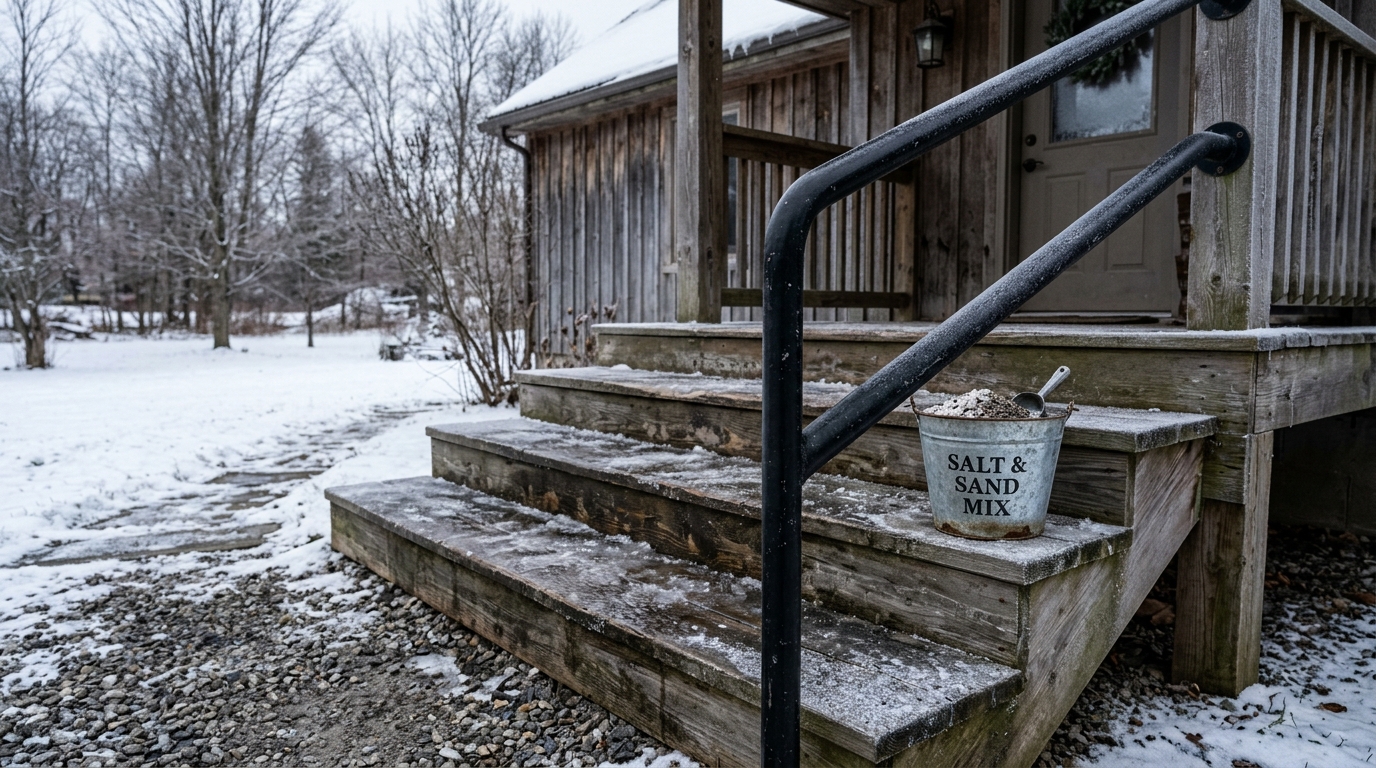
You've walked those porch steps for 40 years, so you know them by heart. Then a freeze puts a clear glaze on the top one, and suddenly the morning paper feels like a dare. One slip is enough to change the day.
Falls aren't an inevitable part of getting older. More than 1 in 4 adults 65 and older fall each year, yet less than half tell their doctor. If you've gone down, slid, or had to grab the counter, say so.
Falls are the leading cause of injury-related death for adults 65 and older. Winter brings more trouble outdoors, but a few ordinary habits can make the trip to the mailbox safer.
- ✓**Treat the route first.** Put salt or sand down before a freeze, not after the steps turn slick.
- ✓**Keep a hand available.** Let the rail carry some of the work while your coffee stays inside.
- ✓**Report the close calls.** Your doctor needs to hear about a fall even when there isn't a bruise.
What the winter numbers show
Winter accounted for 26.2% of the year's older-adult emergency-department fall visits in 2015, compared with about 24% in each of the other seasons. The increase was most noticeable in outdoor falls, particularly among men and adults ages 65 to 74. In that analysis, ice or snow was involved in about 97% of weather-related outdoor falls.
Those figures don't mean every porch is a hazard or that you shouldn't go outside all season. They do make a dark morning and a shiny step worth slowing down for. Indoor falls happen, too, so take the same care in the bathroom, kitchen, and hallway.
Nearly 319,000 older adults are hospitalized for hip fractures each year, according to the CDC. The fall death rate climbed 21%, moving from 64.7 per 100,000 older adults in 2018 to 78.4 per 100,000 in 2024. The numbers are sobering, but they're also a reason to fix the little hazards now.
A fall doesn't have to leave a mark
Maybe you catch yourself on the counter. Maybe you sit on the floor, rub your knee, and get up embarrassed. Those moments count, even when no ambulance arrives.
A medication can make you dizzy. So can a change in vision, foot pain, weak legs, or a balance problem. Ask your doctor or pharmacist to review your medicines, and keep a yearly eye exam on the calendar so your glasses prescription can be updated when needed.
Fear can shrink your world after a fall. You move less, lose strength, and become more vulnerable to the next one. Tell your care team about the first slip while there's still time to find the cause. They can't help with what they don't know.
Make the outside walk less risky
1. Treat the surface early. Spread salt or sand before the storm or freeze; waiting for ice means you're already behind.
2. Turn on the light. A porch light on a timer can show you the path when you step out for the paper.
3. Use the rails. Both sides of the steps give you an option if one rail is icy or your other hand's holding a bag.
4. Add shoe traction. Ice cleats or slip-on grippers can help outdoors. Take them off at the door because they'll catch on indoor flooring.
5. Travel light. Leave the mug and phone behind so one hand is free for the rail.
6. Have medicines checked. A pharmacist can look for medicines that cause dizziness, sleepiness, or unsteadiness. Don't stop one on your own.
7. Keep your eyes on the calendar. A yearly eye exam and current glasses can make the route easier to see, so don't let that appointment slide.
The CDC includes Tai Chi among activities that build leg strength and balance. Ask your doctor what fits your health and mobility before you begin a new class or exercise program.
The penguin trick is surprisingly useful
On ice, take short steps and keep your feet fairly flat. Let your arms move a bit, and keep your weight over your feet. Yes, you'll look a little like a penguin. That's the point: it's easier to remember than a lecture.
Keep your hands out of your coat pockets. Slow down before a step, at the edge of a driveway, or wherever the pavement shines. If the path looks bad, don't gamble on it; ask somebody to clear it or wait. The mail isn't going anywhere.
If the ground wins
Pause and take stock before trying to stand. If you aren't badly hurt, roll to your side, get onto your hands and knees, and crawl toward a sturdy chair. Severe pain or dizziness means you shouldn't force the climb. Call for help if you can't get up safely.
Write down what happened even if you feel fine afterward: where you fell, what shoes you wore, whether the surface was wet or icy, and whether dizziness came before or after. Those details can help your doctor find a practical fix, and you'll have a clearer account of what happened.
When to call your doctor (or 911)
Tell your doctor about any fall. Ask about screening, medicines, eyesight, strength, balance, and hazards in your home.
Put the salt by the door tonight, before the next freeze. And tell your doctor about that slip you nearly talked yourself out of mentioning.
Fact-Checked Medical Sources
Last reviewed: November 2026 · Fact-checked & verified