It's late evening. The pie is gone, the game is still on, and the turkey has been sitting on the counter since 3. Someone says to let the food cool before refrigerating it. That familiar advice is exactly where many families go wrong.
The USDA's rule is easier to remember: refrigerate leftovers within 2 hours, or within 1 hour if the temperature is above 90°F. Hot food can go straight into the refrigerator.
Then comes the second deadline. Use most cooked leftovers within 3 to 4 days. For a Thursday Thanksgiving dinner, Monday is the last day to eat them or move them to the freezer.
- ✓Get leftovers into the refrigerator within 2 hours.
- ✓Use shallow containers so food cools quickly.
- ✓Eat refrigerated leftovers within 3 to 4 days, or freeze them.
The room-temperature cooling myth
In a USDA study cited in its Thanksgiving guidance, 76% of respondents said they'd let leftovers cool to room temperature before refrigerating them. That wait isn't necessary. It gives harmful bacteria more time to multiply, even when the food still smells fine.
You don't have to wait for the steam to stop. Divide the food into smaller portions, use shallow covered containers, and put them in the refrigerator or freezer promptly. A whole turkey or a deep pot of gravy cools too slowly in the middle.
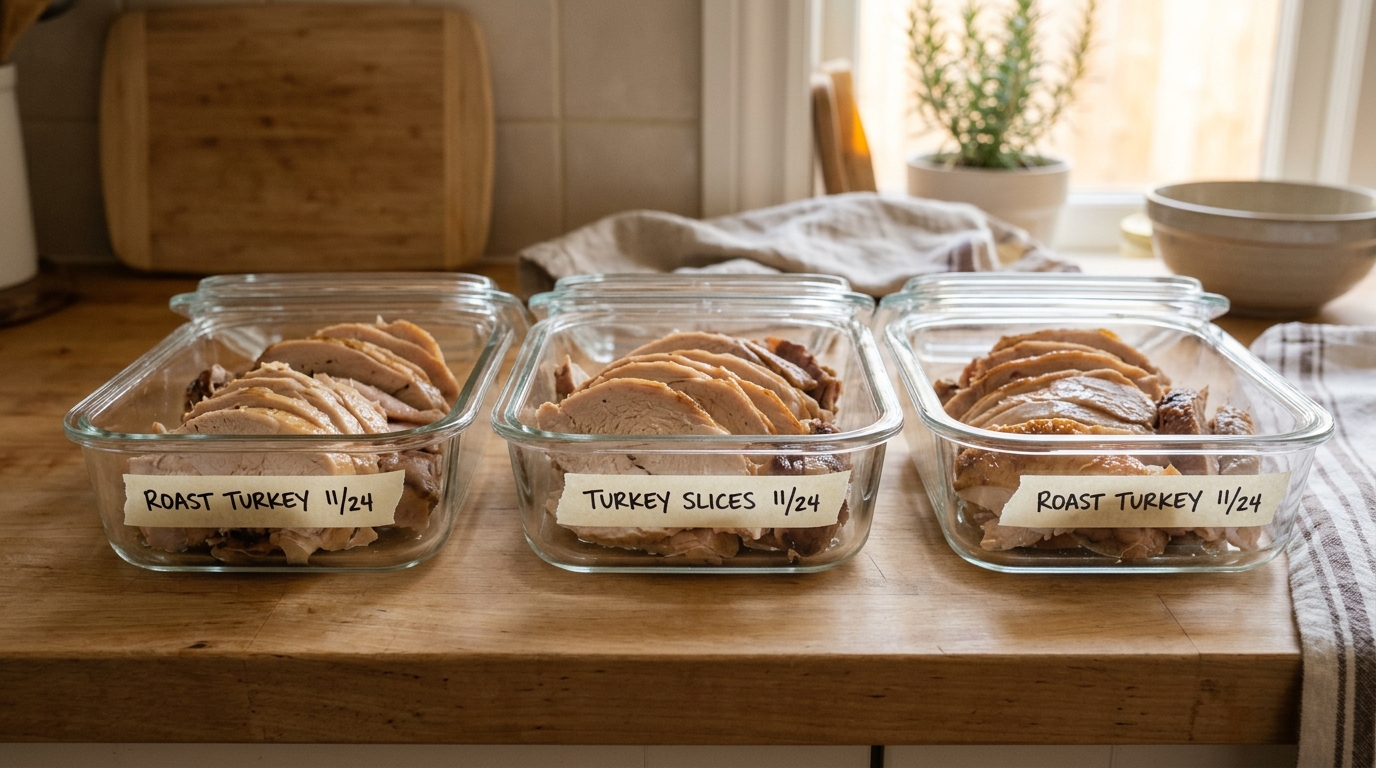
Leave a little space between containers so cold air can move around them. Once the food is chilled, stack it neatly and label the lid. A date on the container beats a family debate on Sunday.
Treat the two-hour rule like a clock
Start counting when food goes on the table, not when someone remembers the leftovers. A second helping doesn't restart the clock. Keep an eye on buffet dishes, too.
If food has been at room temperature for more than 2 hours, the USDA says to discard it. Use the 1-hour limit when the temperature is above 90°F, such as at an outdoor gathering or in a hot car.
A food thermometer helps with hot and cold holding, but it can't make food safe after it has sat out too long. If you don't know how long a dish has been on the counter, throw it out. Don't taste it to investigate.
What Monday means for leftovers
Most cooked leftovers last 3 to 4 days in a refrigerator at 40°F or below. The calendar is a useful shortcut, but the clock still starts at the meal.
The USDA says 31% of people in its research would eat leftovers kept longer than 4 days. Don't rely on a good smell or familiar appearance. You can't see, smell, or taste every harmful germ.
Freezing is the better choice for food you won't eat by Monday. Frozen food stays safe indefinitely when kept at 0°F, although quality declines over time. Plain turkey slices are best quality within 4 months. Turkey covered with broth or gravy is best quality within 6 months.
Pack the food for a fast chill
1. Carve the turkey. Cut the meat into smaller pieces instead of putting the whole bird in the refrigerator. Slice the breast, and portion the legs and wings as needed.
2. Empty the cavity. Remove stuffing from the turkey and refrigerate it separately in a shallow container.
3. Use shallow containers. Spread turkey, stuffing, potatoes, vegetables, and gravy into small portions in covered containers.
4. Label the lids. Write the date on each container, then put anything you will not eat by Monday in the freezer.
5. Make room before dinner. A crowded refrigerator can't cool and hold food as easily, so clear a shelf before guests arrive.
When you reheat leftovers, bring them to 165°F, measured with a food thermometer. This is the part of the routine that turns a labeled container into a safe second meal. Cover food in the microwave, rotate it for even heating, and check more than one spot because microwaves can leave cold areas. Reheat gravy and sauces until they reach a rolling boil.
Why the rules matter more after 65
Adults 65 and older are more likely to be hospitalized or die from foodborne illness, according to FoodSafety.gov. Age-related changes in the immune system and other body systems can make an infection harder to handle. Chronic conditions may add risk, too.
That doesn't mean skipping the family meal. It means making the safe choice routine: smaller containers, a labeled lid, and a refrigerator before the two-hour mark. Good storage is practical, especially when guests are still in the kitchen and the dishes are waiting.
You don't need a culinary degree here. You'll just need a lid and a date, and you'll be glad you made room.
When to call your doctor (or 911)
Call your doctor for bloody diarrhea, diarrhea lasting more than 3 days, a fever over 102°F, vomiting so often you can't keep liquids down, or signs of dehydration such as very little urination, a dry mouth, or dizziness when standing. These are CDC warning signs of severe food poisoning.
Don't prepare food for other people while you're sick, and ask your doctor about testing or treatment if symptoms are severe. For a food-safety question about meat or poultry, USDA's Meat and Poultry Hotline can help.
By Monday, eat the leftovers or move them to the freezer. If you're tired, keep it simple: a lid, a date and the nerve to throw out what shouldn't be trusted.
Fact-Checked Medical Sources
Last reviewed: November 2026 · Fact-checked & verified