The Day Lincoln Spoke at Gettysburg
Lincoln was not the main speaker at Gettysburg. He was asked for a few remarks after a two-hour oration. What happened on November 19, 1863, and what came after.
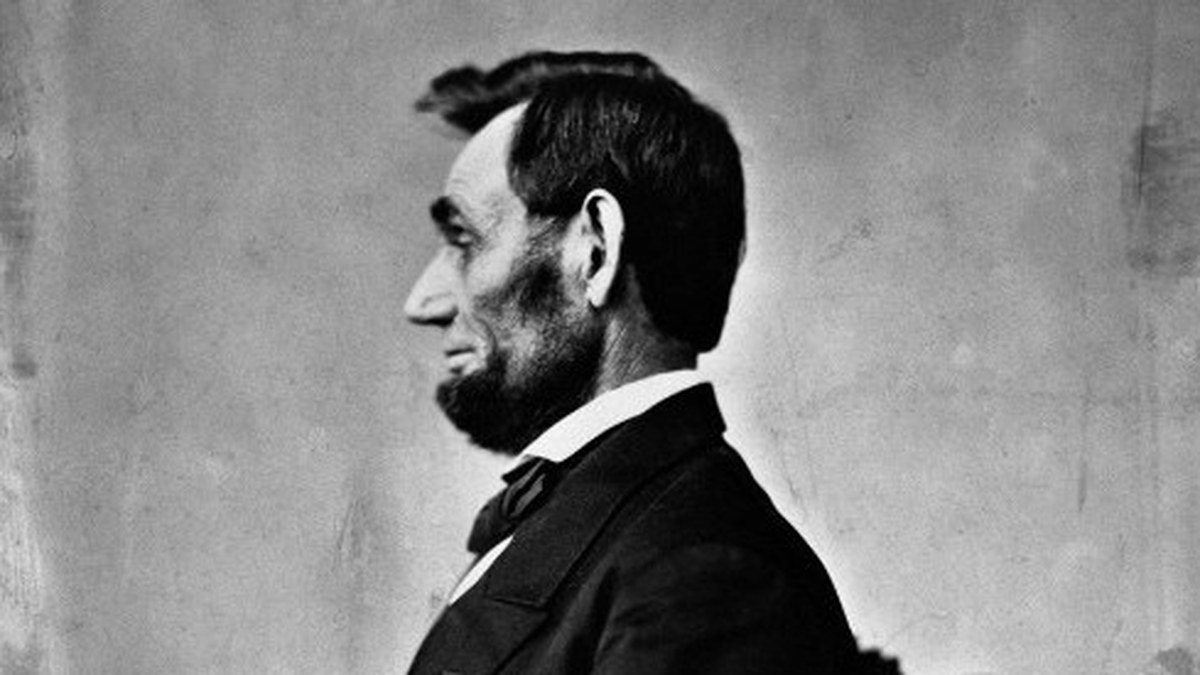
Lincoln's train left Washington just after noon on Wednesday, November 18, 1863. He reached Gettysburg, Pennsylvania, around sundown and went to the home of David Wills, a local attorney, on the town square.
That night, according to later accounts, bands and singers gathered outside the house and called for him. He said a few words. He was not there to give the big speech. That job belonged to someone else.
The next day Lincoln spoke for about two minutes, near the end of a long program, at a new cemetery for the Union dead. The record of that day shows how small his part was meant to be, and how quickly people disagreed about what he had done with it.
Why there was a cemetery
Four and a half months earlier, from July 1 to 3, 1863, the Union and Confederate armies fought across the fields around the town. The National Park Service counts nearly 51,000 killed, wounded, or missing, and calls it the bloodiest battle of the Civil War.
More American Memories
Explore Our "Remember When" Archive of Treasured Decades →Union dead lay in temporary graves all over the battlefield. David Wills led the effort to bring them together in one place, a cemetery on Cemetery Hill. The reburials began in late October, about three and a half months after the battle. Within a few years the cemetery held more than 3,500 Union soldiers.
The invitation
The principal speaker was Edward Everett. Wills asked the President only to make "a few appropriate remarks" after Everett's oration. The Library of Congress preserves that wording.
November 19, 1863
Accounts describe rain overnight and a fair morning. A procession formed in the town square and moved out to the cemetery. Observers guessed the crowd at anywhere from 15,000 to 20,000 people. No official headcount has been found.
The program ran in order: a funeral march, a prayer, music, Everett's oration, more music, the President's remarks, a dirge, a benediction, and an artillery salute.
Everett spoke for about two hours. Then Lincoln stood up.
He began, in the version known as the Bliss copy: "Four score and seven years ago our fathers brought forth on this continent, a new nation, conceived in Liberty, and dedicated to the proposition that all men are created equal."
That Bliss copy is usually counted at 272 words, though counts vary with how you treat hyphens and which copy you use. In the middle came a line that turned out to be wrong: "The world will little note nor long remember what we say here, but it can never forget what they did here." He closed with the hope that "government of the people, by the people, for the people, shall not perish from the earth."
Then he sat down, and the program moved on to the dirge.
The reviews
The newspapers split. The Springfield Republican in Massachusetts called it "a perfect gem; deep in feeling, compact in thought and expression, and tasteful and elegant in every word and comma." The Chicago Times wrote that "The cheeks of every American must tingle with shame as he reads the silly, flat, and dishwatery utterances." The Chicago Tribune praised it, and the Harrisburg Patriot and Union did not.
The review that mattered most came the next day, in a letter from Everett. "I should be glad if I could flatter myself," he wrote, "that I came as near to the central idea of the occasion in two hours as you did in two minutes."
Lincoln answered the same day. "In our respective parts yesterday, you could not have been excused to make a short address, nor I a long one," he wrote. He added that he was pleased to know that "the little I did say was not entirely a failure." Both letters are held at the Massachusetts Historical Society.
The envelope and other stories
The story goes that Lincoln scribbled the speech on the back of an envelope on the train. The record does not establish it. Lincoln's secretary John Nicolay said Lincoln did no writing on the train, and scholars trace the popular train scene to "The Perfect Tribute," a short story by Mary Raymond Shipman Andrews published in 1906. The Library of Congress does hold an envelope with the address on it, but it is a later facsimile of the Bliss copy, not anything Lincoln used.
Another story has Lincoln telling his friend Ward Hill Lamon that the speech "won't scour," a farmer's phrase for a plow that won't cut clean. That comes from Lamon's recollections, edited by his daughter and published decades later, and historians have found real problems with them. Lincoln's own letter to Everett, written the day after, is the better evidence of what he thought.
Five copies, not one
There is no single original. Five manuscript copies in Lincoln's hand survive, named for the people who had them: Nicolay and Hay, both at the Library of Congress; Everett, at the Abraham Lincoln Presidential Library in Springfield, Illinois; Bancroft, at Cornell University; and Bliss, at the White House.
They are not identical. The Nicolay and Hay copies do not include the words "under God." The three later copies, written out after the speech for people who asked, do. Historians still debate which one is closest to what Lincoln said on the platform.
There is also a photograph. In 1952, Josephine Cobb of the National Archives studied a Mathew Brady negative of the dedication crowd and identified a figure in it as Lincoln. It is often described as the only known photograph of him at Gettysburg, though other identifications of figures in other plates have been proposed since.
- Every year on November 19, Gettysburg National Military Park holds Dedication Day at the Soldiers' National Cemetery, on the anniversary of the address. The Wills House, where Lincoln spent the night, still stands on the town square.
-
🏛️
Soldiers' National Cemetery, Gettysburg National Military Park: nps.gov/gett ↗
-
🏛️
David Wills House, 8 Lincoln Square: gettysburgfoundation.org ↗
-
🏛️
The Nicolay copy, Library of Congress: loc.gov ↗
-
🏛️
Everett's letter and Lincoln's reply, Massachusetts Historical Society: masshist.org ↗
Join the Conversation
"Did you have to memorize the Gettysburg Address in school, and do you still know how it starts?"
DailyVibeX American History Community
- National Park Service, Gettysburg Foundation Document: https://www.nps.gov/gett/learn/management/upload/GETT_FD_SP-508.pdf ↗
- National Park Service, Gettysburg seminar paper (casualty wording): https://irma.nps.gov/DataStore/Reference/Profile/2196777 ↗
- National Park Service, Gettysburg National Cemetery: https://www.nps.gov/gett/learn/news/cemetery-water-line.htm ↗
- National Park Service, Wills House exhibit: https://www.nps.gov/gett/learn/historyculture/wills-house-virtual-identity-lieutenant-henry-minnigh.htm ↗
- National Park Service, Gettysburg Environmental Assessment (Dedication Day): https://www.nps.gov/gett/learn/management/upload/GETT-EISE-FMP-EA-Final-July-2-2014-508.pdf ↗
- Gettysburg Foundation, David Wills House: https://www.gettysburgfoundation.org/news/2023-news/david-wills-house-hours-of-operation ↗
- Allen C. Guelzo, "A New Birth of Freedom," Gettysburg College: https://cupola.gettysburg.edu/cwfac/18 ↗
- Gettysburg College, "Something Must Be Done": https://cupola.gettysburg.edu/compiler/182 ↗
- Robert Fortenbaugh, "Abraham Lincoln at Gettysburg, November 18 and 19, 1863," Pennsylvania History: https://journals.psu.edu/phj/article/download/21137/20906 ↗
- John Carroll University, 1863 ceremony volume: https://collected.jcu.edu/lincolnbooks/1 ↗
- Library of Congress, Nicolay copy and exhibit text: https://www.loc.gov/resource/mal.4356500/?st=text ↗
- Library of Congress, Bliss copy facsimile: https://www.loc.gov/resource/lprbscsm.scsm0717/?st=gallery ↗
- Library of Congress, dedication ceremonies photograph record: https://www.loc.gov/item/2018671678 ↗
- National Archives, "An Address for the Ages": https://www.archives.gov/publications/prologue/1995/fall/honorable-reports-3.html ↗
- National Archives, Josephine Cobb photograph record: https://catalog.archives.gov/id/12167664 ↗
- Massachusetts Historical Society, Everett to Lincoln, November 20, 1863: https://www.masshist.org/database/1780 ↗
- Massachusetts Historical Society, Lincoln to Everett, November 20, 1863: https://www.masshist.org/database/viewer.php?img_step=1&item_id=1781&mode=transcript ↗
- Cornell University Library, "Contemporary Reactions": https://exhibits.library.cornell.edu/gettysburg/feature/ideas-are-always-more-than-battles ↗
- Lawrence University Library, "Gettysburg Address turns 150": https://blogs.lawrence.edu/library/2013/11/gettysburg-address-turns-150.html ↗
- Kent Gramm, "A More Perfect Tribute," Journal of the Abraham Lincoln Association: https://doi.org/10.5406/19457987.25.2.05 ↗
- Paul Zall, "Scouring the Text of Lamon's Recollections," Journal of the Abraham Lincoln Association: https://doi.org/10.5406/19457987.30.2.05 ↗
- Gettysburg College, Jordan, Ohio newspapers and the address: https://cupola.gettysburg.edu/ghj/vol5/iss1/5 ↗
Sponsored Historical & Heritage Features
Step Into Pine Hollow: 20 Complete American Stories
Warm, character-rich tales of small-town resilience, family heirlooms, and neighborly kindness.
Explore All 20 Stories →More Surprising American History
Did Paul Revere Really Shout "The British Are Coming"?
The line everyone learned isn't in any of Revere's own accounts. What he did that night, in his own words, is a better story than the poem.
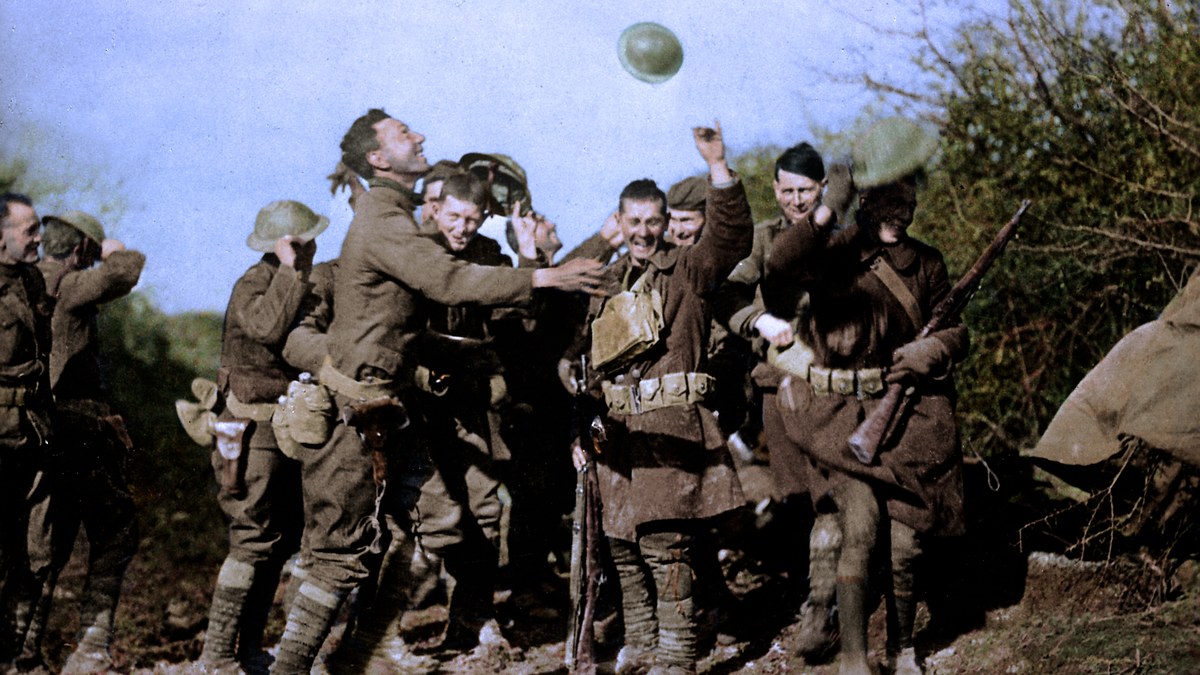
Why Veterans Day Is on November 11
The date comes from one hour in 1918. The name came from a veteran in Birmingham, Alabama. And for a few years in the 1970s, the holiday wasn't in November at all.
Route 66 Turns 100: How the Mother Road Began
Route 66 didn't open with a ribbon. It began with a vote in North Carolina, an argument over a number, and a road that was mostly unpaved.