Route 66 Turns 100: How the Mother Road Began
Route 66 didn't open with a ribbon. It began with a vote in North Carolina, an argument over a number, and a road that was mostly unpaved.
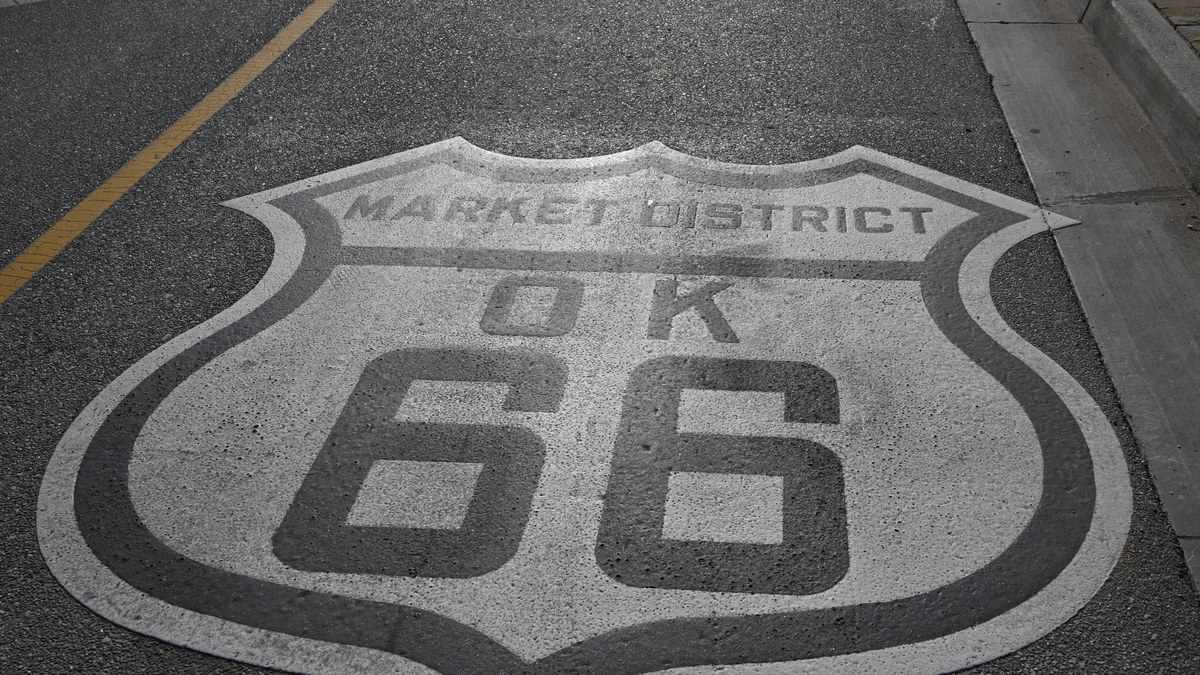
On College Street in Springfield, Missouri, the city marks the spot where the Colonial Hotel once stood. On April 30, 1926, Cyrus Avery of Tulsa and Missouri highway engineer B.H. Piepmeier sent a telegram from Springfield to Washington about the new highway from Chicago to Los Angeles.
The message that matters is one short line, as the Federal Highway Administration prints it: "We prefer sixty six to sixty two."
That is why Springfield calls itself the birthplace of Route 66. But the date the country celebrates is today. On November 11, 1926, the road became part of the new national system of numbered U.S. highways. It did not open that day, and nobody cut a ribbon. What was approved 100 years ago was a number in a national system. Signs and promotion followed, and with them the idea that a person could follow one road across eight states.
What happened on November 11, 1926
The vote took place far from Missouri, at the annual meeting of the American Association of State Highway Officials in Pinehurst, North Carolina. The group approved the U.S. numbered highway system that day. The government did not even announce it to the public until January 2, 1927, after maps could be prepared.
More American Memories
Explore Our "Remember When" Archive of Treasured Decades →The road itself was not new. The National Park Service describes Route 66 as a stitching together of existing local, state, and national roads. It ran from Chicago to Los Angeles through Illinois, Missouri, Kansas, Oklahoma, Texas, New Mexico, Arizona, and California. Later alignments carried it to Santa Monica and the Pacific.
How long was it? That depends on who is measuring and which alignment. The Park Service rounds it to about 2,400 miles. The Route 66 Centennial Commission uses about 2,448 miles from Chicago to Santa Monica.
The fight over a number
Route 66 was almost Route 60. Under the numbering plan, the most important east-west roads got numbers ending in zero, and the Chicago to Los Angeles road was first slated for 60. Kentucky objected. It had no major east-west route ending in zero, and its officials wanted one.
The compromise gave 60 to a road from Newport News, Virginia, to Springfield, Missouri, and offered Avery's road 62. Then John M. Page, Oklahoma's chief highway engineer, noticed that 66 had not been assigned to anything. Avery and Piepmeier took it. The telegram followed.
Avery is remembered in Tulsa as the road's chief promoter, and Springfield businessman John T. Woodruff worked alongside him. Neither man built Route 66. They argued it into existence and then sold it.
A road that was mostly unpaved
In 1926, by one estimate from the Texas Historical Commission, only about 800 miles of the roughly 2,500-mile route were paved. Illinois was already paved. Most of the rest was not.
In 1928 the road's promoters used a footrace to draw attention to it. On March 4, a race organized by sports promoter C.C. Pyle left Los Angeles, followed Route 66 to Chicago, and finished in New York on May 26. It was nicknamed the "Bunion Derby." The Oklahoma Historical Society counts 199 starters and 55 finishers over 84 days and 3,423.3 miles. The winner was Andy Payne.
By 1938, the Park Service says, paving crews had finished the job, and the highway had pavement from Chicago to Los Angeles.
How it became the Mother Road
The nickname came from a novel. In 1939, John Steinbeck's "The Grapes of Wrath" followed a family driving west out of the Dust Bowl. Chapter 12 begins, "HIGHWAY 66 IS THE main migrant road." A few lines later Steinbeck wrote, "66 is the mother road, the road of flight."
After World War II the road meant something else: vacations. In 1946, Bobby Troup wrote "(Get Your Kicks on) Route 66," and the Nat King Cole Trio recorded it that same year.
Bypassed, one town at a time
The road that made the trip possible was undone by a newer one. On June 29, 1956, President Eisenhower signed the Federal-Aid Highway Act, which paid for the Interstate system. Over the next three decades, Interstates 55, 44, 40, 15, and 10 replaced Route 66 piece by piece.
The last section to go was at Williams, Arizona, where Interstate 40 bypassed the town in 1984. In June 1985, the highway officials' association, by then called AASHTO, approved removing U.S. 66 from the system. The surviving committee record is dated June 26 and reads, in part, "Elimination of U.S. Route 66 -- APPROVED."
What's left
More than you might think. In 1999 Congress created the Route 66 Corridor Preservation Program within the National Park Service, and the Park Service says more than 170 projects along the old road have received its grants since 2001. Route 66 is not a national park or a National Historic Trail. It is a string of towns that kept their part of it.
At Petrified Forest National Park in Arizona, the Park Service notes, you can see the only stretch of Route 66 inside a national park, marked by a line of old telephone poles across the desert.
-
🏛️
Route 66 State Park, Eureka, Missouri, where the visitor center is the 1935 Bridgehead Inn on the original road: mostateparks.com ↗
-
🏛️
Oklahoma Route 66 Museum, Clinton, run by the Oklahoma Historical Society: okhistory.org ↗
-
🏛️
Cyrus Avery Centennial Plaza, Tulsa: cityoftulsa.org ↗
-
🏛️
Petrified Forest National Park, Arizona, Historic Route 66: nps.gov ↗
-
🏛️
NPS Route 66 travel and centennial information: nps.gov ↗
Join the Conversation
"Did your family ever drive any part of Route 66, and what do you remember stopping for?"
DailyVibeX American History Community
- Federal Highway Administration, "Complete U.S. Highway System Now Designated and Approved" (1927 announcement): https://www.fhwa.dot.gov/highwayhistory/ushwypr.cfm ↗
- Federal Highway Administration, "From Names to Numbers": https://www.fhwa.dot.gov/infrastructure/numbers.cfm ↗
- Federal Highway Administration, U.S. Route 66 history: https://highways.dot.gov/highway-history/interstate-system/us-route-66 ↗
- Federal Highway Administration, Route 66 fact sheet: https://www.fhwa.dot.gov/candc/factsheets/route66.pdf ↗
- Federal Highway Administration, June 29, 1956: https://www.fhwa.dot.gov/byday/fhbd0629.htm ↗
- National Park Service, "Before 1926: The Origins of Route 66": https://www.nps.gov/articles/before-1926-the-origins-of-route-66.htm ↗
- National Park Service, "Route 66, 1926 to 1945": https://www.nps.gov/articles/route-66-1926-1945.htm ↗
- National Park Service, Route 66 overview: https://www.nps.gov/articles/route-66-overview.htm ↗
- National Park Service, Route 66 Corridor Preservation Program: https://www.nps.gov/orgs/1453/rosi.htm ↗
- National Park Service, Route 66 history: https://www.nps.gov/orgs/1453/route-66-history.htm ↗
- National Park Service, Route 66 in Arizona: https://www.nps.gov/articles/000/route-66-arizona.htm ↗
- National Park Service, Illinois road segments: https://www.nps.gov/places/illinois-road-segments.htm ↗
- National Park Service, Special Resource Study, Route 66 (2024): https://www.nps.gov/orgs/1453/upload/Special-Resource-Study-Route-66-Illinois-Missouri-Kansas-Oklahoma-Texas-New-Mexico-Arizona-and-California_12_9_24.pdf ↗
- National Park Service, Petrified Forest, Historic Route 66: https://www.nps.gov/pefo/learn/historyculture/historic-route-66.htm ↗
- Arizona Department of Transportation, "Happy Birthday, Historic Route 66": https://azdot.gov/adot-blog/happy-birthday-historic-route-66 ↗
- Missouri Historical Society, "How Did Route 66 Get Its Number?": https://mohistory.org/blog/how-did-route-66-get-its-number/ ↗
- Missouri State University Libraries, Route 66 birthday accounts: https://libnotes.missouristate.edu/2022/04/route-66-turns-96-on-saturday/ ↗
- City of Springfield, College Street / Route 66: https://www.springfieldmo.gov/620/College-Street-Route-66 ↗
- Springfield Convention and Visitors Bureau, History of Route 66: https://www.springfieldmo.org/about-springfield/the-history-of-route-66/ ↗
- Texas Historical Commission, Route 66 historic context: https://www.thc.texas.gov/public/upload/preserve/survey/highway/Rt%2066%20Tx%20Historic%20Context.pdf ↗
- Smithsonian National Museum of American History, "The People's Highway": https://www.americanhistory.si.edu/explore/exhibitions/america-on-the-move/online/route-66 ↗
- Oklahoma Historical Society, "Bunion Derby": https://www.okhistory.org/publications/enc/entry?entryname=BUNION+DERBY ↗
- Northern Arizona University Special Collections, "Promoting the Road": https://library.nau.edu/speccoll/exhibits/route66/promotion.html ↗
- John Steinbeck, "The Grapes of Wrath" (1939), digitized text: https://archive.org/stream/in.ernet.dli.2015.261773/2015.261773.The-Grapes_djvu.txt ↗
- AASHTO Route Numbering Committee record, June 26, 1985: https://en.wikisource.org/wiki/Page:AASHTO_USRN_1985-06-26.pdf/5 ↗
- Route 66 Centennial Commission, media resources: https://route66centennial.org/participate-menu-header/media-resources ↗
Sponsored Historical & Heritage Features
Step Into Pine Hollow: 20 Complete American Stories
Warm, character-rich tales of small-town resilience, family heirlooms, and neighborly kindness.
Explore All 20 Stories →More Surprising American History
Why Veterans Day Is on November 11
The date comes from one hour in 1918. The name came from a veteran in Birmingham, Alabama. And for a few years in the 1970s, the holiday wasn't in November at all.
Did Paul Revere Really Shout "The British Are Coming"?
The line everyone learned isn't in any of Revere's own accounts. What he did that night, in his own words, is a better story than the poem.
The Real Story of the Teddy Bear, 1902
The teddy bear began with a hunt in the Mississippi Delta, a guide named Holt Collier, and a bear that did not survive the story.