250 Years Ago Tonight: Washington Crosses the Delaware
On Christmas night 1776, about 2,400 men crossed an icy Delaware River. They were hours behind schedule by morning. What Washington and Knox wrote about that night, 250 years ago.
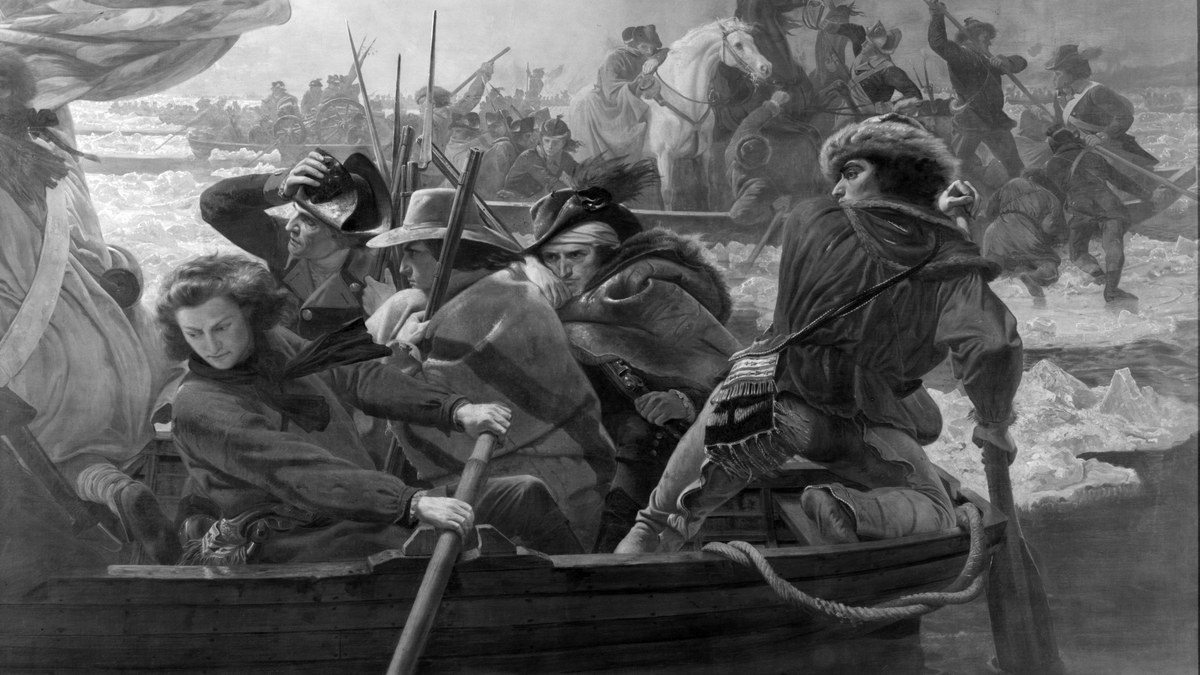
The orders for Christmas Day, 1776, set an exact time.
"The heads of the Columns to be appointed to arrive at Trenton at five oClock," George Washington's general orders read.
It did not happen that way. By five the next morning, his army was still marching in the dark, hours behind. What happened that night, Wednesday, December 25, 1776, is one of the best-documented nights of the Revolution, because Washington and his officers wrote it down.
A discouraged army
That December, the Continental Army was in bad shape. After losing New York, it had retreated across New Jersey and over the Delaware River into Pennsylvania.
More American Memories
Explore Our "Remember When" Archive of Treasured Decades →On December 18, Washington wrote to his brother Samuel that he had fewer than 3,000 men fit for duty. Many enlistments ran out at the end of the year. Reinforcements under General John Sullivan, about 2,000 men, reached him on December 20.
That same month, Thomas Paine published "The American Crisis" in Philadelphia. It opens with a line printed in capitals, "THESE are the times that try men's souls" and the Library of Congress reports that Washington had it read to his troops on Christmas Day.
Christmas night
On the afternoon of the 25th, the troops gathered about a mile back from McKonkey's Ferry, on the Pennsylvania side. The orders called for complete silence. Colonel Henry Knox was put in charge of getting everyone across.
The boats were handled by sailors, including men of John Glover's regiment from Marblehead, Massachusetts, whom Washington described as "bred to the sea," according to the National Park Service. They used Durham boats, big freight boats built to haul iron on the Delaware.
About 2,400 men crossed that night, with 18 field guns. The river was full of floating ice.
"A very severe Night"
Washington described it to John Hancock, the president of Congress, two days later. He had hoped to get the whole force and its artillery over by midnight. Instead, "it was three OClock before the Artillery could all be got over, and near four, before the Troops took up their line of march."
"The difficulty of passing the River in a very severe Night, and their March thro' a violent Storm of Snow and Hail, did not in the least abate their Ardour," he wrote.
Knox wrote home to his wife, Lucy, two days after that: "The night was cold and stormy; it hailed with great violence; the troops marched with the most profound silence and good order."
Two other crossings planned for the same night, farther downriver, did not make it. General James Ewing could not get across at Trenton Ferry because of the ice. Colonel John Cadwalader got part of his infantry over but could not land his cannon, and turned back.
Eight o'clock
Washington put the march to Trenton at about nine miles. His force went in two columns, one along the river road and one along the Pennington Road.
His upper division, Washington wrote, "arrived at the Enemys advanced post, exactly at eight OClock."
Trenton was held by about 1,500 Hessian soldiers, German troops serving the British, under Colonel Johann Rall. You may have heard that they were drunk from Christmas celebrating. The Delaware River Basin Commission's history of the crossing says they were on alert and not drinking. They were still caught by surprise.
The fight was short. "The Number, that submitted in this manner, was 23 Officers and 886 Men," Washington reported. Rall was mortally wounded and died the next day. On the American side, Washington counted two officers and one or two privates wounded. One of the wounded, according to state and Army historians, was a young lieutenant named James Monroe, the future president. Other official accounts give different totals, and this article uses Washington's.
By that evening, the army was back across the river in Pennsylvania with its prisoners and captured guns.
What it changed
The win did not end the war. But a few days later, on December 30, Washington wrote that regiments from New England whose terms were ending had agreed to stay six more weeks, for a bounty of $10 a man.
A second fight at Trenton followed on January 2, 1777, and a victory at Princeton on January 3. Pennsylvania's park treats the days from the Christmas crossing to Princeton as one short campaign.
You may also have heard that the password that night was "Victory or Death." The phrase is tied to the crossing in later accounts, but it does not appear in Washington's surviving orders for December 25.
The painting
The famous image of the crossing is Emanuel Leutze's "Washington Crossing the Delaware," painted in Germany in 1851. The Metropolitan Museum of Art, which owns it, points out what the artist changed. The real crossing happened at night, not at dawn. The flag shown in the painting is out of place for 1776. And the boat is far too small for its load.
- At Washington Crossing Historic Park in Pennsylvania, reenactors cross the river in replica Durham boats on Christmas Day when conditions allow. The park says formal annual presentations began in 1953, after earlier informal attempts. For the 250th, the park has announced its 74th annual Christmas Day Crossing for Friday, December 25, 2026, from noon to 3 p.m., with the river crossing at about 1 p.m. Check the park's site before you go.
-
🏛️
Washington Crossing Historic Park, Pennsylvania, with the Durham Boat House: washingtoncrossingpark.org ↗
-
🏛️
Washington Crossing State Park, New Jersey, where the army landed at Johnson's Ferry: dep.nj.gov ↗
-
🏛️
Old Barracks Museum, Trenton, which plans its Battles of Trenton reenactment for December 26, 2026: barracks.org ↗
-
🏛️
Leutze's painting, The Metropolitan Museum of Art, New York: metmuseum.org ↗
-
🏛️
Washington's letter to Hancock, December 27, 1776, Founders Online: founders.archives.gov ↗
Join the Conversation
"Have you ever been to Washington Crossing, in Pennsylvania or New Jersey, or seen the Christmas reenactment?"
DailyVibeX American History Community
- Founders Online (National Archives), Washington to John Hancock, December 27, 1776: https://founders.archives.gov/documents/Washington/03-07-02-0355 ↗
- Founders Online, General Orders, December 25, 1776: https://founders.archives.gov/documents/Washington/03-07-02-0341 ↗
- Founders Online, Washington to Samuel Washington, December 18, 1776: https://founders.archives.gov/documents/Washington/03-07-02-0299 ↗
- Founders Online, Washington to John Hancock, December 24, 1776: https://founders.archives.gov/documents/Washington/03-07-02-0338 ↗
- Founders Online, John Cadwalader to Washington, December 27, 1776: https://founders.archives.gov/documents/Washington/03-07-02-0353 ↗
- Founders Online, Washington to the commanding officer at Morristown, December 30, 1776: https://founders.archives.gov/documents/Washington/03-07-02-0385 ↗
- New Jersey State Archives, Henry Knox to Lucy Knox, December 28, 1776: https://nj.gov/state/historical/assets/pdf/topical/war-document-december-28th-1776.pdf ↗
- Library of Congress, George Washington Papers timeline, the American Revolution: https://www.loc.gov/collections/george-washington-papers/articles-and-essays/timeline/the-american-revolution/ ↗
- Library of Congress, Thomas Paine, "The American Crisis," 1776 broadside: https://www.loc.gov/resource/rbpe.03902300/?loclr=blogser&st=text ↗
- Library of Congress, Currier and Ives, "Washington crossing the Delaware": https://www.loc.gov/resource/pga.10105/ ↗
- U.S. Army Center of Military History, "The New Jersey Campaign, 1776 to 1777": https://history.army.mil/Portals/143/Images/Publications/catalog/71-45.pdf ↗
- U.S. Army Center of Military History, Revolutionary War campaign summaries: https://history.army.mil/Research/Reference-Topics/Army-Campaigns/Brief-Summaries/Revolutionary-War-Campaigns/ ↗
- National Museum of the U.S. Army, "Crossing the Delaware": https://www.thenmusa.org/articles/crossing-the-delaware/ ↗
- National Park Service, "John Glover: Sailor, Soldier, Patriot": https://www.nps.gov/articles/000/john-glover-sailor-soldier-patriot.htm ↗
- National Park Service, Lower Delaware: https://www.nps.gov/lode/learn/historyculture/stories.htm ↗
- National Park Service, Old Barracks National Register record: https://npgallery.nps.gov/NRHP/GetAsset/NRHP/71000506_text ↗
- National Park Service, Washington-Rochambeau timeline: https://www.nps.gov/waro/learn/historyculture/timeline-of-the-war-for-independence.htm ↗
- Pennsylvania DCNR, Washington Crossing Historic Park history: https://www.pa.gov/agencies/dcnr/recreation/where-to-go/state-parks/find-a-park/washington-crossing-historic-park/history ↗
- Pennsylvania DCNR, Washington Crossing Historic Park sightseeing: https://www.pa.gov/agencies/dcnr/recreation/where-to-go/state-parks/find-a-park/washington-crossing-historic-park/sightseeing ↗
- Washington Crossing Historic Park, "Cross With Us" (2026 events): https://www.washingtoncrossingpark.org/cross-with-us/ ↗
- Washington Crossing Historic Park, early reenactments: https://www.washingtoncrossingpark.org/early-reenactments-of-washington-crossing-the-delaware/ ↗
- New Jersey State Parks, Washington Crossing State Park: https://dep.nj.gov/parksandforests/state-park/washington-crossing-state-park/ ↗
- Delaware River Basin Commission, "The Crossing": https://www.nj.gov/drbc/public/outreach/crossing.html ↗
- Old Barracks Museum, annual Battles of Trenton reenactment: https://barracks.org/support/living-history-and-reenacting-at-the-old-barracks/annual-battles-of-trenton-reenactment/ ↗
- The Metropolitan Museum of Art, Washington Crossing the Delaware (97.34): https://www.metmuseum.org/collection/the-collection-online/search/11417 ↗
- The Metropolitan Museum of Art, "Beyond Myths": https://www.metmuseum.org/primer/american-wing/beyond-myths ↗
- The Metropolitan Museum of Art, "A Majestic Undertaking": https://www.metmuseum.org/en/perspectives/a-majestic-undertaking ↗
- Smithsonian American Art Museum, Emanuel Gottlieb Leutze: https://americanart.si.edu/artist/emanuel-gottlieb-leutze-2897 ↗
Sponsored Historical & Heritage Features
Step Into Pine Hollow: 20 Complete American Stories
Warm, character-rich tales of small-town resilience, family heirlooms, and neighborly kindness.
Explore All 20 Stories →More Surprising American History
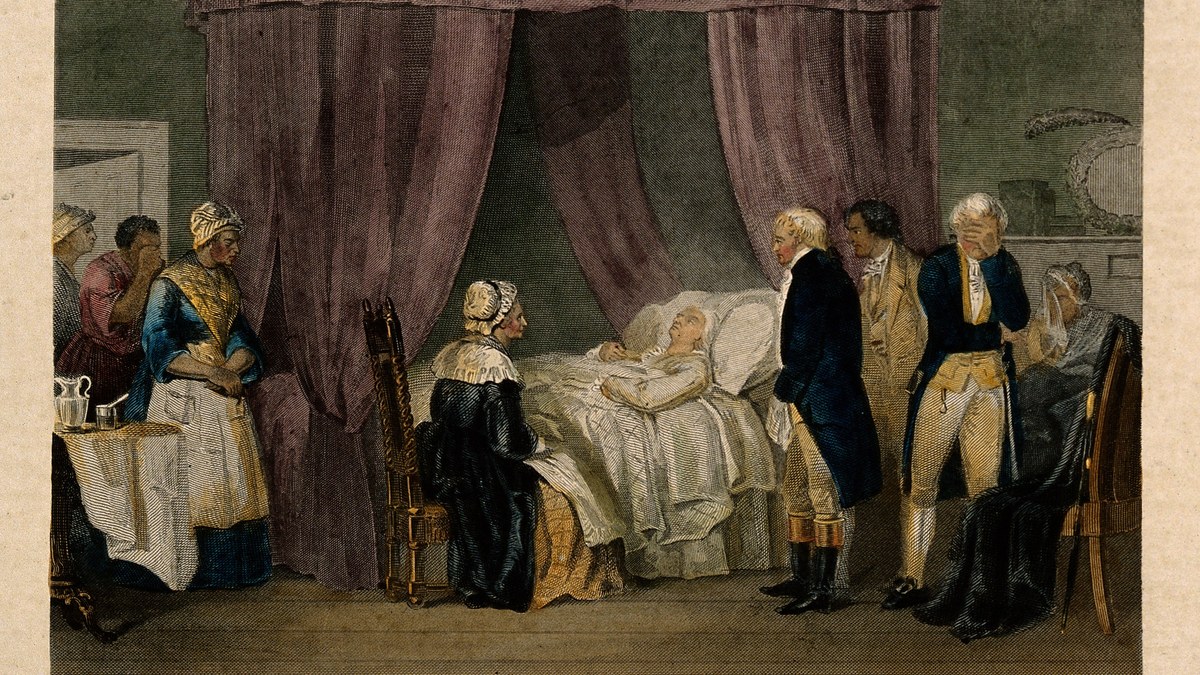
How Did George Washington Die? His Last Day in 1799
A ride in the snow, a sore throat, and less than a day of illness. How George Washington died on December 14, 1799, from the account of the man who sat with him.
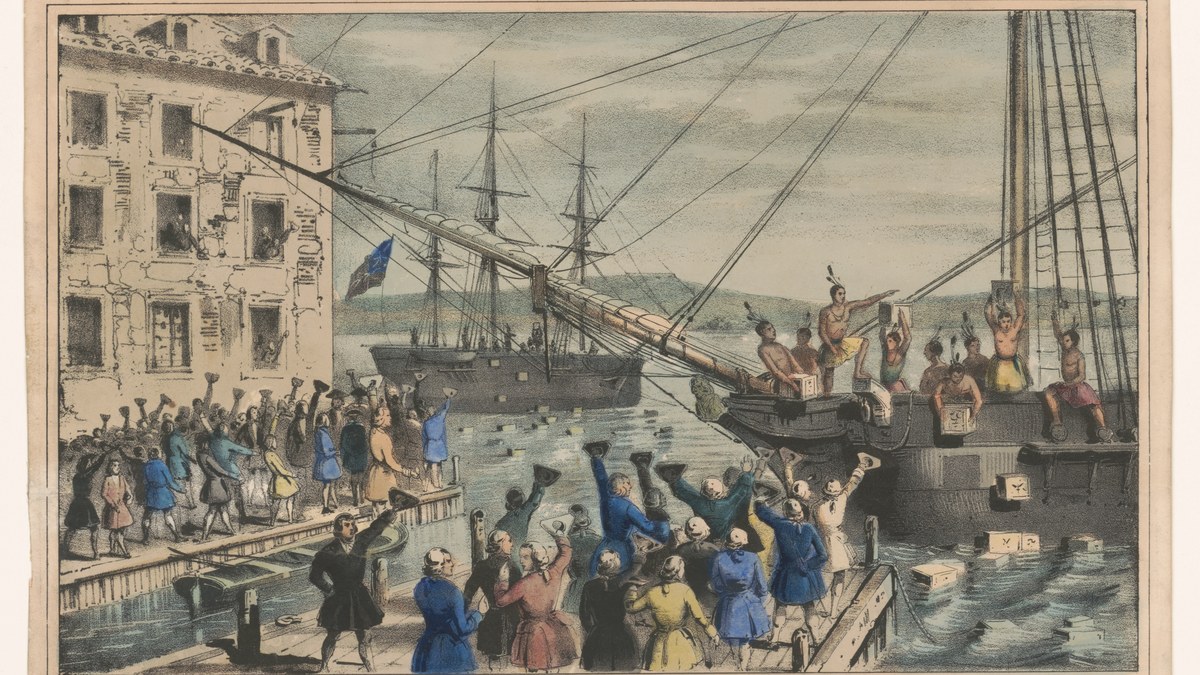
What Really Happened at the Boston Tea Party
The Tea Act made legal tea cheaper, not dearer. The disguises were blankets and soot. The famous name came decades later. What the record says about December 16, 1773.
Did Paul Revere Really Shout "The British Are Coming"?
The line everyone learned isn't in any of Revere's own accounts. What he did that night, in his own words, is a better story than the poem.