"Yes, Virginia": The True Story Behind the Letter
It ran in September, not at Christmas. It had no byline. And the girl who asked grew up to spend more than 40 years in New York's schools. The real story of "Yes, Virginia."
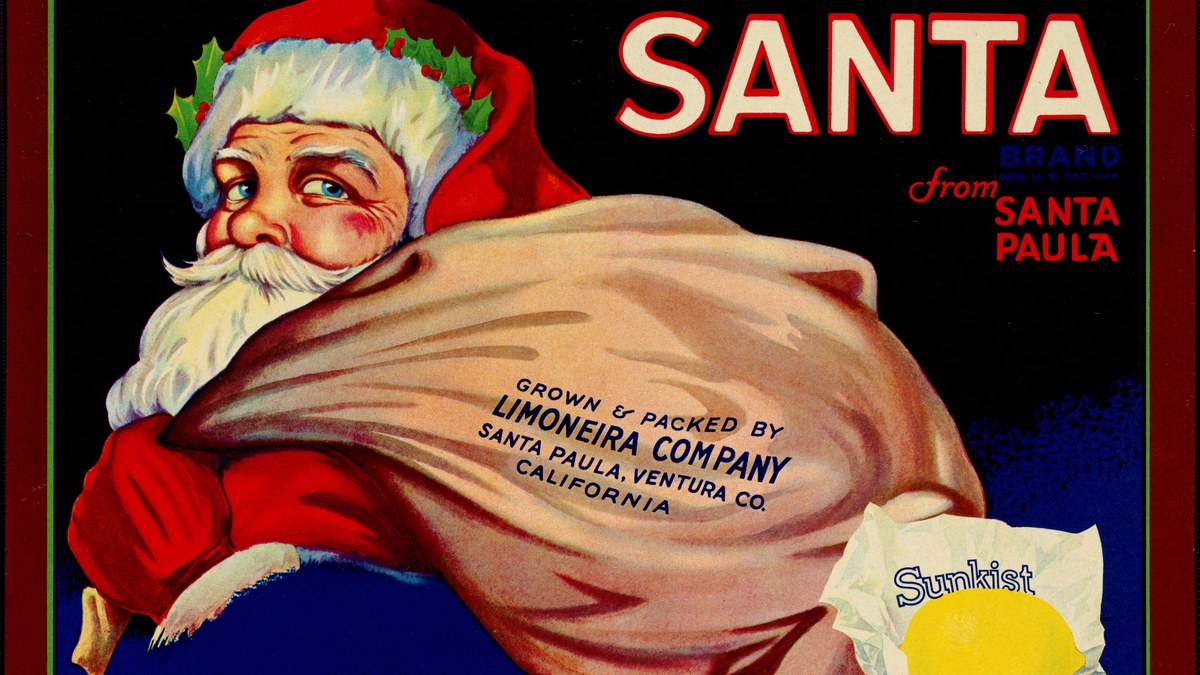
It ran on a Tuesday in September.
On September 21, 1897, The Sun of New York printed a short letter on its editorial page, page 6. The answer below it carried a plain headline, "Is There a Santa Claus?" There was no byline. It sat in the third of the day's three editorial columns.
The paper said it was answering the letter "thus prominently" and was glad to count its young author among the friends of The Sun. The Sun's editorial page in those years was better known for sharp political attacks than for anything gentle, the historian W. Joseph Campbell has written.
Christmas was more than three months away.
More American Memories
Explore Our "Remember When" Archive of Treasured Decades →The question
The letter was signed by Virginia O'Hanlon, of 115 West 95th Street in Manhattan. Here is how it began:
"Dear Editor: I am 8 years old."
"Some of my little friends say there is no Santa Claus."
Then came the line that put the newspaper on the spot. Her papa, she wrote, said that if you see it in The Sun, "it's so."
And then the question. Please tell me the truth, she asked, "is there a Santa Claus?"
Her father, Dr. Philip F. O'Hanlon, was a physician associated with the city's police department and coroner's office, according to later accounts in The New York Times. Years later, Virginia remembered checking the paper's question and answer column day after day, waiting for her reply. It did not appear there. Her father told her the paper had answered her with a whole editorial.
The man who answered
The editor of The Sun, Edward P. Mitchell, gave the letter to one of his editorial writers, Francis Pharcellus Church. Church was a Columbia College graduate who had reported on the Civil War before he settled into writing editorials.
According to Mitchell's later recollection, quoted by the Library of Congress, Church "bristled and pooh-poohed" at the assignment. Then he wrote fewer than 500 words.
"Virginia, your little friends are wrong," he began. "They have been affected by the skepticism of a skeptical age."
Then came the sentence that people remember: "Yes, Virginia, there is a Santa Claus."
He went on: "He exists as certainly as love and generosity and devotion exist."
He imagined the world without him. "It would be as dreary as if there were no Virginias," Church wrote. There would be "no childlike faith then, no poetry, no romance to make tolerable this existence."
He took on the doubters' strongest argument, too. "Nobody sees Santa Claus, but that is no sign that there is no Santa Claus," he wrote. "The most real things in the world are those that neither children nor men can see."
"Did you ever see fairies dancing on the lawn?" he asked. "Of course not, but that's no proof that they are not there." There is, he wrote, "a veil covering the unseen world," and only faith, fancy, poetry, love, and romance can push it aside.
He ended with a promise: "A thousand years from now, Virginia, nay, ten times ten thousand years from now, he will continue to make glad the heart of childhood."
The Sun did not tell readers who had written it. Church's name became public only after his death, on April 11, 1906.
It was not an overnight sensation
Here is a common mistake: the idea that The Sun printed the editorial every Christmas from 1897 on. It did not.
The journalism historian W. Joseph Campbell went through the paper year by year. He found that The Sun reprinted the editorial in 1902, explaining that requests for it had become numerous, and again in December 1906 as a tribute to Church. It became a regular Christmas feature only in the 1920s. The last reprint ran in 1949. The Sun published its final edition in January 1950.
So the Christmas tradition was built largely by readers, who kept writing in to ask for the editorial again. Campbell found no sign of an immediate stir in other papers in 1897. The editorial grew famous slowly.
The girl who asked
Virginia O'Hanlon grew up to be a teacher.
She earned her bachelor's degree from Hunter College in 1910, then a master's from Columbia. The New York Times says she entered the city's public school system in 1912. In 1930, Fordham University gave her a doctorate in education. Her dissertation was titled "The Importance of Play."
By then she was Laura Virginia O'Hanlon Douglas. She became a principal and finished her career as junior principal of P.S. 401 in Brooklyn, a school for children who were in hospitals and institutions. She retired in 1959; a Times report that year described her career as 43 years.
She died on May 13, 1971, in Valatie, New York. She was 81.
- The original page is online, free, at the Library of Congress. You can read her letter and Church's answer exactly as New Yorkers saw them that Tuesday morning in 1897.
-
🏛️
The Sun, September 21, 1897, page 6, Library of Congress, Chronicling America: loc.gov ↗
-
🏛️
"Yes, Virginia" research guide, Library of Congress: guides.loc.gov ↗
-
🏛️
Virginia's childhood home, 115 West 95th Street, now the Studio School, a working school rather than a museum: studioschoolnyc.org ↗
-
🏛️
An interview with Virginia O'Hanlon Douglas, WNYC archive and NYC Municipal Archives: wnyc.org ↗
Join the Conversation
"How old were you when you started to wonder about Santa, and who answered your questions?"
DailyVibeX American History Community
- Library of Congress, Chronicling America, The Sun (New York), September 21, 1897, image 6: https://www.loc.gov/resource/sn83030272/1897-09-21/ed-1/?sp=6&st=text ↗
- Library of Congress, research guide, "Yes, Virginia, There Is a Santa Claus": https://guides.loc.gov/chronicling-america-yes-virginia/introduction ↗
- Library of Congress, The Sun title record: https://www.loc.gov/item/sn83030272/ ↗
- Library of Congress, Detroit Publishing Co., "New York City, Newspaper Row, Park Row": https://www.loc.gov/item/2016795444/ ↗
- Fordham University, Laura V. Douglas dissertation record, "The Importance of Play" (1930): https://research.library.fordham.edu/gse_student/3/ ↗
- Fordham Magazine, "Yes, Virginia: A New Yorker's Lifelong Faith in the Spirit of Christmas": https://now.fordham.edu/fordham-magazine/yes-virginia-a-new-yorkers-lifelong-faith-in-the-spirit-of-christmas/ ↗
- The New York Times, "Prompted Santa Claus Editorial" and obituary, May 14, 1971: https://www.nytimes.com/1971/05/14/archives/prompted-santa-claus-editorial-letter-to-the-sun.html ↗
- The New York Times, "Virginia, Now 70, Quits as Teacher," June 12, 1959: https://www.nytimes.com/1959/06/12/archives/virginia-now-70-quits-as-teacher-school-principal-who-at-8-asked-is.html ↗
- The New York Times, "Yes, Virginia, a Thousand Times Yes," September 21, 1997: https://www.nytimes.com/1997/09/21/weekinreview/yes-virginia-a-thousand-times-yes.html ↗
- The New York Times, Francis P. Church obituary, April 13, 1906: https://www.nytimes.com/1906/04/13/archives/francis-p-church.html ↗
- The New Yorker, "The Santa Claus Girl," December 19, 1936: https://www.newyorker.com/magazine/1936/12/19/the-santa-claus-girl ↗
- W. Joseph Campbell, "The Grudging Emergence of American Journalism's Classic Editorial": https://wjosephcampbell.com/wp-content/uploads/2020/01/article_is-there-santa-claus.doc-copy.pdf ↗
- Wikisource, "Is There a Santa Claus?" (transcription): https://en.wikisource.org/wiki/Is_There_a_Santa_Claus%3F_(New_York_Sun) ↗
- W. Joseph Campbell, "Getting It Right About a Legendary Newspaper Editorial," 2020: https://wjosephcampbell.com/2020/12/24/getting-it-right-about-a-legendary-newspaper-editorial/ ↗
- The New York Sun, editorial transcription: https://www.nysun.com/article/yes-virginia-there-is-a-santa-claus ↗
- CBC News, 2019: https://www.cbc.ca/news/virginia-santa-claus-editorial-christmas-1.5399189 ↗
- WNYC, interview with Virginia O'Hanlon Douglas: https://www.wnyc.org/story/interview-with-virginia-ohanlon-douglas/ ↗
- The Studio School, "Virginia's Letter and Church's Editorial": https://www.studioschoolnyc.org/virginia-pages/virginias-letter-churchs-editorial ↗
- Landmark West, 115 West 95th Street: https://www.landmarkwest.org/115-west-95th-street/ ↗
Sponsored Historical & Heritage Features
Step Into Pine Hollow: 20 Complete American Stories
Warm, character-rich tales of small-town resilience, family heirlooms, and neighborly kindness.
Explore All 20 Stories →More Surprising American History

Rudolph Was Born in a Department Store
Before the song and the TV special, Rudolph was a free booklet from Montgomery Ward. How a Chicago copywriter named Robert L. May created him in 1939.
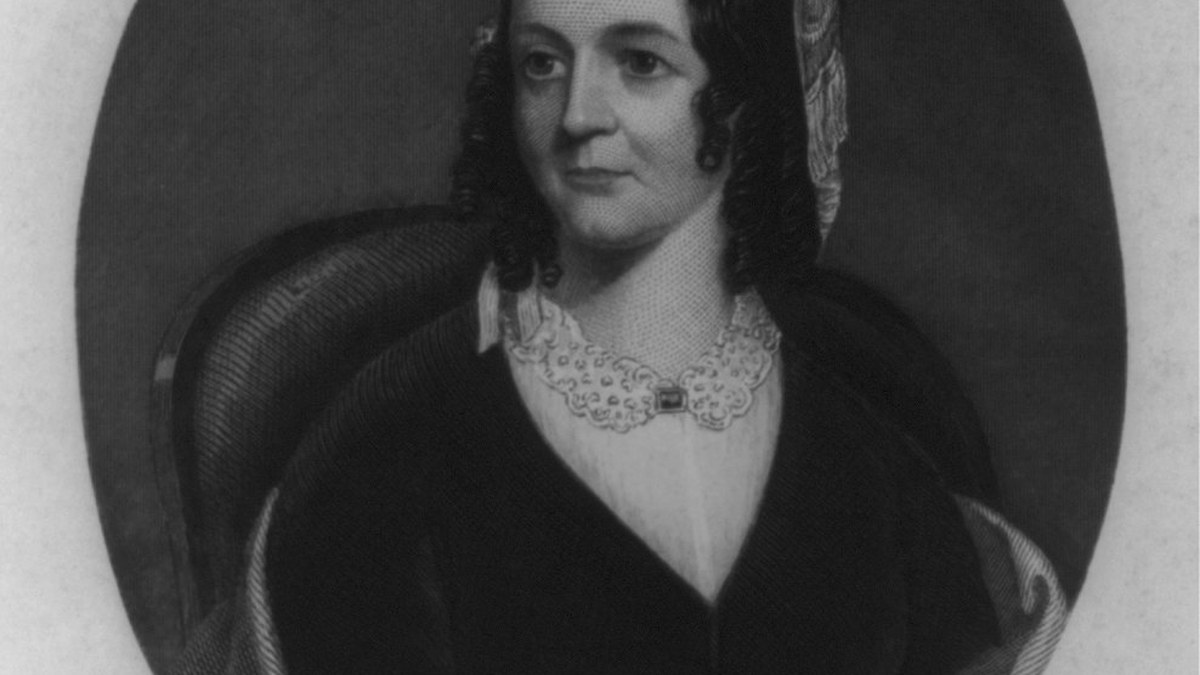
Sarah Josepha Hale and the Long Fight for Thanksgiving
A magazine editor from New Hampshire spent years asking presidents for a national Thanksgiving. Five days after her letter to Lincoln, he proclaimed one.
Did Paul Revere Really Shout "The British Are Coming"?
The line everyone learned isn't in any of Revere's own accounts. What he did that night, in his own words, is a better story than the poem.