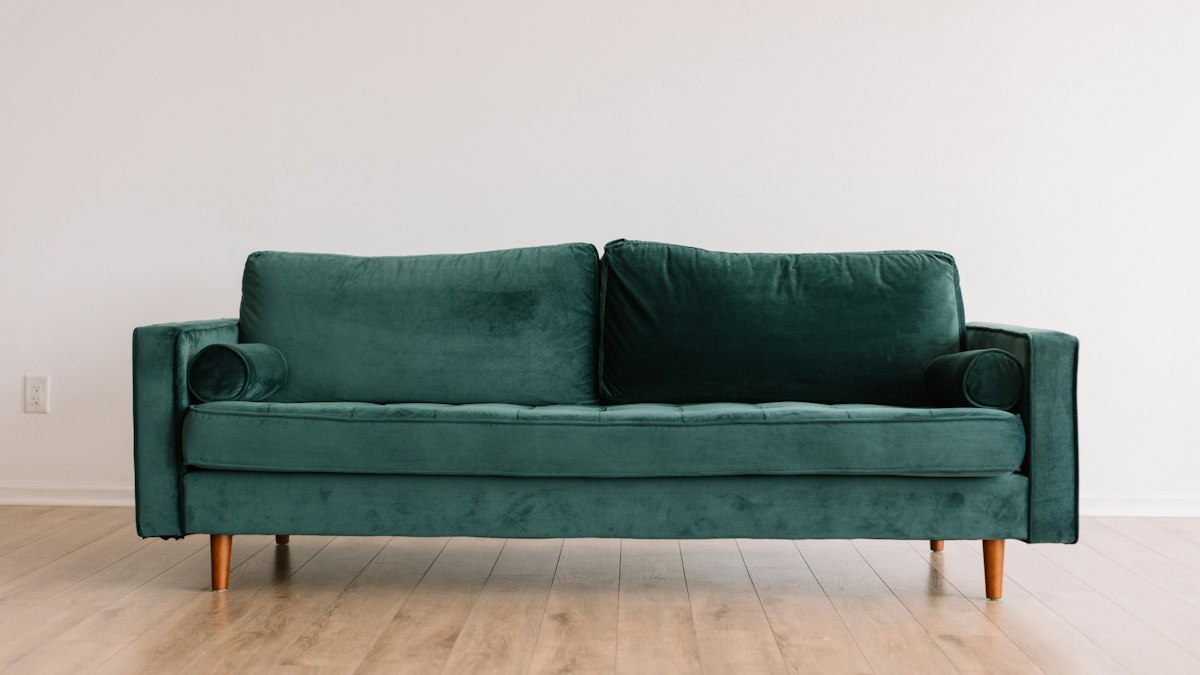
You heard it before you felt it. A soft crackle as you sat down, then a long squeak as the air escaped.
In July, it stuck to the backs of your legs. Getting up in shorts felt like pulling off a bandage. And underneath that clear layer sat a sofa in gold or champagne brocade that looked brand new, because in a way it was. Hardly anyone had ever actually touched it.
If you grew up visiting a grandmother, great-aunt, or neighbor with plastic on the good furniture, you were in very large company.
A "Miracle Product" of the 1950s
Vinyl came out of World War II as one of the new wonder materials. By 1946, Scientific American was writing about vinyl covering materials and their "trio of virtues": beauty, durability, and easy handling.
In the 1950s, clear vinyl slipcovers took off in American homes. A 2000 Philadelphia Inquirer story called them "a miracle product of the 1950s," right alongside Tupperware and wash-and-wear clothes.
The pitch was simple. Spills wiped off. Kids and pets couldn't hurt it. As one South Philadelphia woman, then 75, told the paper: "You take a damp rag, wipe the plastic, and you're finished."
The Real Reason: The Sofa Was a Big Deal
To understand the plastic, you have to understand the sofa.
For a lot of families, a living room set was one of the most expensive things they would ever buy, and it was expected to last for decades. Shopping for one was an event. The color, the fabric, and the price were debated for weeks.
Often the plastic went on before the sofa ever reached the house. Some furniture stores fitted it before delivery, and upholstery shops sent men out to measure the living room and custom-fit covers on the spot.
A South Philadelphia upholsterer put it plainly to the Inquirer: "Plastic slipcovers were an insurance policy for a lot of people."
Before Air Conditioning, It Made Even More Sense
Long before plastic, families put fabric slipcovers on upholstered furniture for the hot months. Without home air conditioning, summer meant sweat, and sweat meant stains on good fabric.
Clear vinyl did the same job but let you show off the expensive upholstery underneath. Big department stores sold the covers, and slipcover tailors made them to order.
The "Company Only" Living Room
In many homes, the plastic-covered sofa lived in a front room kept for guests, holidays, and the visit from the pastor. The family actually lived in the kitchen or the den.
That's why so many of us remember the plastic as something from someone else's house. You sat on it in your church clothes at Thanksgiving, very still, trying not to squeak.
It Wasn't Just One Kind of Family
The plastic sofa crossed every line. The Tenement Museum in New York, which recreated a 1960s plastic-covered sofa in the parlor of a Puerto Rican garment worker's apartment, notes that visitors of Puerto Rican, Jewish, African American, Chinese, Irish, and Italian backgrounds all recognize it. Their staff hear the same thing over and over: "My grandmother covered her furniture too!"
It was one of those rare things that working-class and middle-class families everywhere seemed to agree on.
Why It Faded Away
Furniture got cheaper. By the 1960s, factories could make a sofa that cost about as much as a custom slipcover. When a sofa is affordable to replace, protecting it forever matters less.
Fabric got tougher. Stain-resistant treatments and more durable upholstery made spills less of a disaster.
Air conditioning spread. Fewer sweaty summers meant fewer reasons to cover anything.
And plastic had its own problems. It cracked over time, and the cracked edges could scratch. Upholsterers warned that sealing fabric in plastic for years could actually damage it, because the material underneath couldn't breathe.
Still Around?
It never completely disappeared. Clear vinyl covers are still sold, usually custom-made, and you'll still find them in some homes that have kept the same living room for fifty years. Museums like the Tenement Museum now display them as part of American family history, which would surprise a lot of grandmothers.
Whose house had the plastic-covered sofa in your family, and were you allowed to sit on it?
Sources
- "Covering Up with Plastics," *Scientific American*, 1946
- "Will Scotchgard's End Mean Return of Plastic Slipcovers?" *Philadelphia Inquirer*, via *The Spokesman-Review*, June 16, 2000
- "Ode to a Plastic Covered Couch," Tenement Museum, 2018
- "An Elegy to Plastic Slipcovers," Next Avenue, 2024
Related Reading
- [another remember-when slug]
- [another category slug]