It might still be written inside a kitchen cupboard door, or on the back of an old photo: a phone number that starts with a word. TUxedo 4. MAdison 6. ELmwood 3.
Glenn Miller made one famous in 1940 with a song called "Pennsylvania 6-5000." Elizabeth Taylor starred in a 1960 movie named after one, BUtterfield 8.
Those words weren't decoration. They were part of how the phone system worked.
How You Actually Dialed It
The word was the name of your telephone exchange, the local office your line connected to. You didn't dial the whole word, only the first two letters, which is why they were printed in capitals.
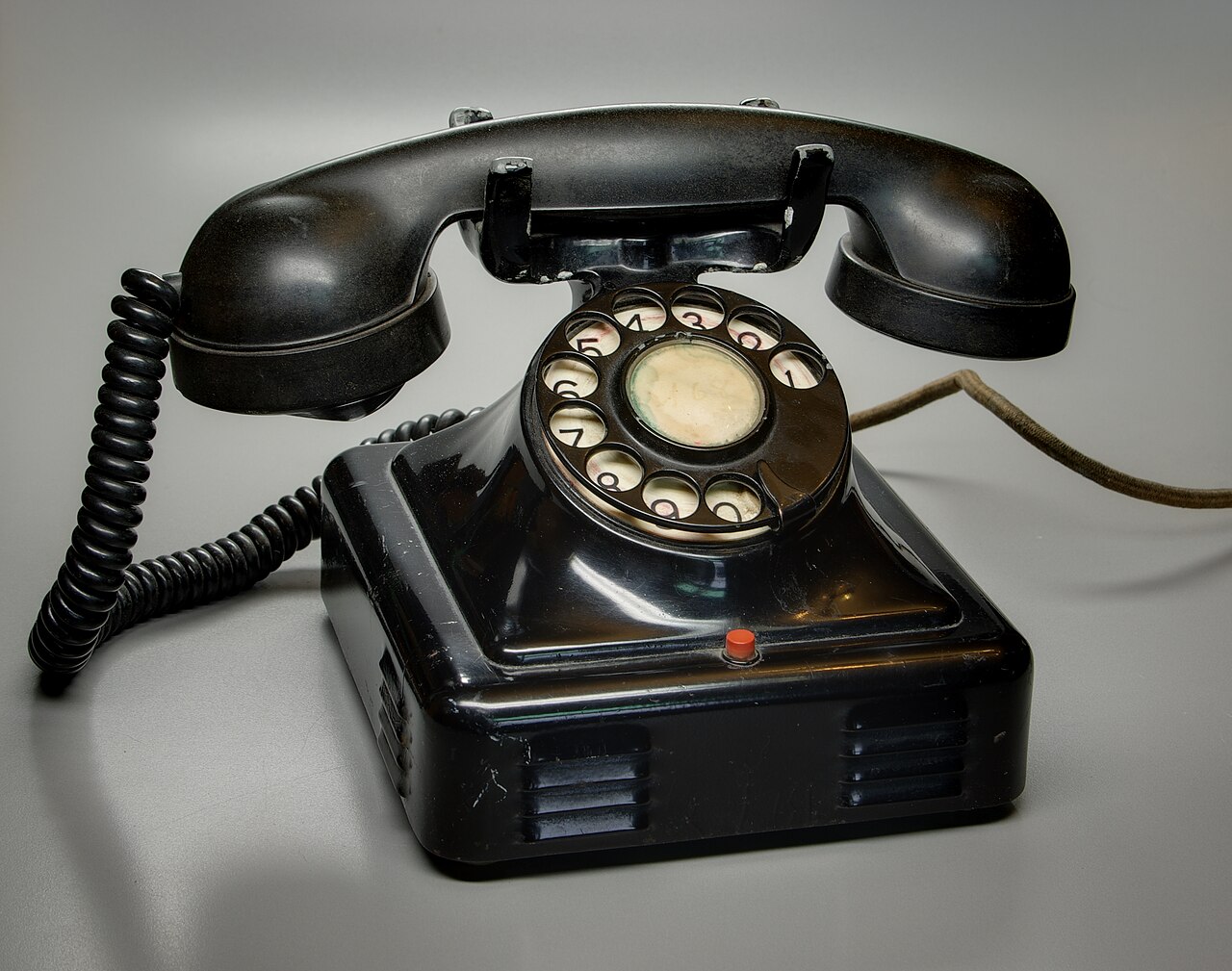
So PEnnsylvania 6-5000 meant: dial P (the 7 hole), E (the 3 hole), then 6-5000. On a modern keypad, that's 736-5000.
The letters on your phone today, the ones nobody uses, are leftovers from this system.
Why Use Words at All?
Words are easier to remember than numbers. "HOllywood" sticks in your head better than "46". Some exchange names were tied to the neighborhood they served, so the name told you roughly where someone lived.
That format, two letters and five numbers, became the standard in the 1950s, as the Bell System prepared for direct long-distance dialing across the country.
Who Picked the Names?
Local phone companies often chose names with local meaning: a street, a park, a founding family. But as the network grew, AT&T sent out a list of recommended exchange names.
The rule was practical. The names had to be easy to say and hard to misspell, with no regional differences in how the first two letters sounded. A name that worked in Boston also had to work in Biloxi.
Why They Disappeared
By the late 1950s, AT&T decided to move to All-Number Calling. The reasons were mostly math and confusion.
They were running out of names. Only certain letter pairs made pronounceable words. All-number codes opened up many more combinations.
Sound-alike names caused wrong numbers. TIME magazine pointed to pairs like MItchell and MUtual. People also dialed PA for PEnnsylvania instead of PE.
The world was coming. Phone companies were planning for international dialing, and many countries put letters on different holes or used different alphabets altogether.
The switch happened gradually, area by area, through the 1960s. In Los Angeles, the phase-out began in 1958 and was largely finished by 1963.
Not Everyone Went Quietly
People liked their exchange names. They were part of a neighborhood's identity, and a string of seven digits felt cold. In 1962, San Franciscans formed the Anti-Digit Dialing League to fight what its members called "creeping numeralism," as TIME reported. Members included the well-known language scholar S. I. Hayakawa, and the league took its case to the California Public Utilities Commission.
The phone company won in the end. In the meantime, directories made the change in stages: first shrinking names to two letters (WO 6-9999 instead of WOrth 6-9999), and later printing numbers as all digits.
Where You Can Still See Them
Look up at old brick buildings in your town. Painted "ghost signs" from the 1940s and '50s sometimes still show a phone number with an exchange name.
Old movies and TV shows are full of them, too. And those letters on the keypad still work: businesses use them every time they ask you to dial 1-800-something that spells a word.
Do you still remember the exchange name of the phone number you grew up with?
Sources
- New York Telephone, notice on the number format change (Telephone Collectors International archive)
- "The Home: By the Numbers," *TIME*
- "Old Telephone Exchange Names in Los Angeles County," Los Angeles Almanac
- "Get Me PEnnsylvania 6-5000," *Los Angeles Times*, July 21, 1997
- "The Anti-Digit Dialers," *The New York Times*, Oct. 2, 1962; "Customs: Give Me Liberty," *TIME*, 1962
Related Reading
- [another remember-when slug]
- [another category slug]